
Hello,
Honduras.
Learn artificial intelligence, meet your local community and build projects with social impact in Honduras.
Connect with the team
Learn by doing
Bring your curiosity and develop your skills through practical work, shared questions and community learning.
Build for social good
Explore how AI can address real challenges. Turn what you learn into a project with a purpose.
Grow together
Connect with learners and mentors from different backgrounds. Share ideas and support each other along the way.
Your learning starts wherever you are.
Explore our online learning paths while you connect with your local community.
Explore the coursesLocal community archive and resources
From the Saturdays.AI community archive. Details of past editions are retained for reference; the local team can confirm the current programme.
Saturdays.AI
Honduras
AI Saturdays Honduras: first-edition archive
When: unconfirmed in the original announcement
Where: Honduras – Online (first edition)
Programme: Machine Learning
Sign up
Course structure:
Code2Learn

During the first half of the program you will learn the fundamentals of Machine Learning with practical programming exercises. In addition, our AI-specialized mentors will share their experiences and success stories.
Build2Learn
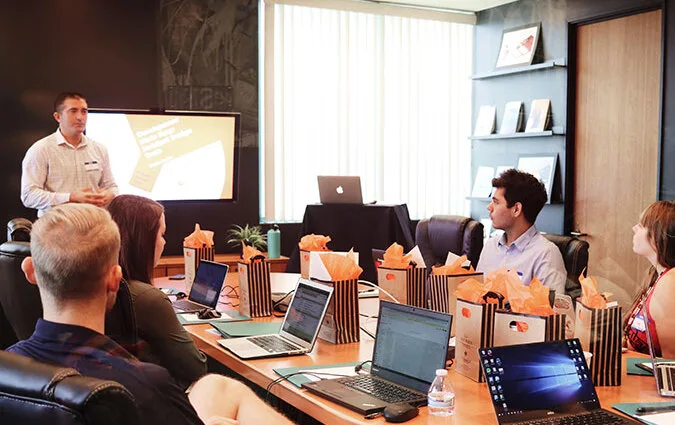
In the second half of the programme, you will develop AI models to address a specific problem, with support from our mentors.
Demo Day

At the end, each team will present its project at Demo Day to share its achievements and what it has learned.
Datathon structure:
Fundamentals of deep learning
We will explore the mathematical foundations of neural networks and build a network using Python, PyTorch and TensorFlow. We will also study optimisation and regularisation.
Convolutional neural networks

To work with images, we will study convolutional neural networks (CNNs), classic architectures and transfer learning.
Recurrent neural networks

We will introduce natural language processing (NLP) through recurrent neural networks (RNNs), including networks with gates and memory cells.
Computer vision

We will continue working with images by applying filters, detecting edges and objects, and learning about the You Only Look Once (YOLO) algorithm.
Advanced topics

We will explore sequence-to-sequence models, attention mechanisms and transformers.
Unsupervised deep learning

We will study latent spaces and the foundations and architectures of generative adversarial networks (GANs).
Cloud computing for deep learning

We will learn the foundations of cloud computing and how to deploy deep learning models with Amazon Web Services.
Ethics for artificial intelligence
AI affects people and society. This module explores appropriate uses, possible risks and our responsibilities when developing these systems.
Artificial intelligence project

In this module, you will learn to develop a project using the programme’s concepts and present it at Demo Day.
Demo Day

At the end of the programme, each team will present its project at Demo Day and share what it has learned.
Mario Lacayo
Electrical Engineer


Mario Roberto García Lacayo was born in Tegucigalpa, Honduras, on 12 November 1999. He attended Federico Froebel for early and basic education and graduated from the Centro de Investigación e Innovación Educativa (CIIE) in 2017 with a technical secondary qualification in Electricity. At the time of this edition, he was nearing completion of Industrial Electrical Engineering at the Universidad Nacional Autónoma de Honduras, with interests in telecommunications, power systems and technology. He uses tools including AutoCAD, Nitro, Wolfram Mathematica, Multisim, KiCad, Radio Mobile, MATLAB, Octave, C++ and Python. He has completed Intermediate Excel and Introduction to Artificial Intelligence courses at INFOP, CCNA 1 at UNAH and basic Mandarin through the Republic of China–INFOP agreement. His experience includes automation with programmable logic controllers such as Siemens LOGO!, Arduino boards, and maintenance of three-phase and single-phase electric motors.
Jorge Zapata
Artificial Intelligence Engineer and Cybersecurity Specialist

Jorge is co-founder and Chief Technology Officer of Neural Coders (neuralcoders.com) and, at the time of this edition, an independent data engineering consultant for MicroTechnologies in manufacturing. He studied data engineering and cybersecurity at LEAD University in Costa Rica. His profile lists certifications in Scrum, CompTIA Security+ and Linux server administration, as well as Saturdays.AI Costa Rica’s Machine Learning Practitioner and Deep Learning Practitioner programmes.
He has worked on AI projects exploring automated detection of diseases such as cancer and diabetic retinopathy, and on computer vision research for medical applications.
He has developed software and data analytics solutions at Roberto Artavia Consultoría Internacional and as an independent consultant. His work includes robotic process automation (RPA), optical character recognition (OCR), natural language processing, human-machine interfaces and architectures for large-scale data collection in robotic systems.
His profile lists indexed publications on quantum computing and industrial applications, comparing quantum and classical approaches to mathematical and AI models.
At Neural Coders, he has led digital transformation initiatives and software engineering teams, implementing machine learning models with secure development practices and cloud computing to manage data in healthcare and banking. With his team, he has also organised capture-the-flag (CTF) activities for penetration testers and people interested in cybersecurity, working with Costa Rica’s national cybersecurity cluster.
He has also taught mathematics for data science through programming, along with courses in data analytics and cybersecurity.
His interests include science, physics, mathematics, biology, cryptography, high-performance and parallel computing, and related technologies.
Edgardo Amaya
Bachelor of Public Administration
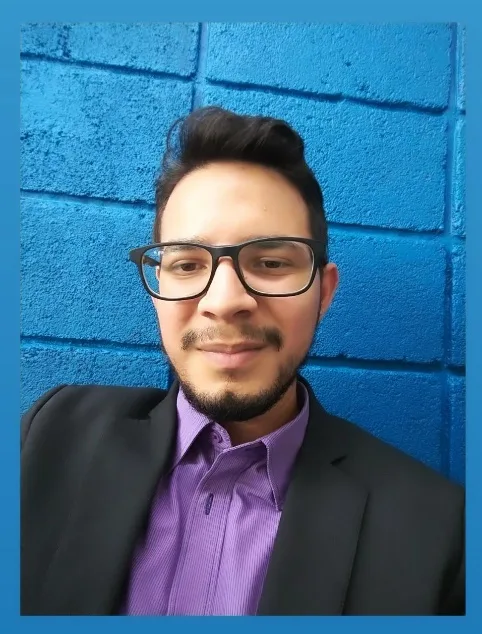
Edgardo Josué Amaya Ordoñez was born in Tegucigalpa, Honduras, on 11 June 1999. He attended Federico Froebel for early and basic education and graduated from the Centro de Investigación e Innovación Educativa (CIIE) in 2017 with a technical secondary qualification in Electricity. At the time of this edition, he was nearing completion of Public Administration at the Universidad Nacional Autónoma de Honduras, with interests in human relations, social and cultural projects, and personnel management. His skills include conflict resolution, individual and teamwork, assertive communication, contingency planning and critical thinking. He has completed Interpersonal Relations and Personnel Management courses at INFOP and has human resources experience focused on improving communication between colleagues and managers.
David Ramírez
Electrical Engineer
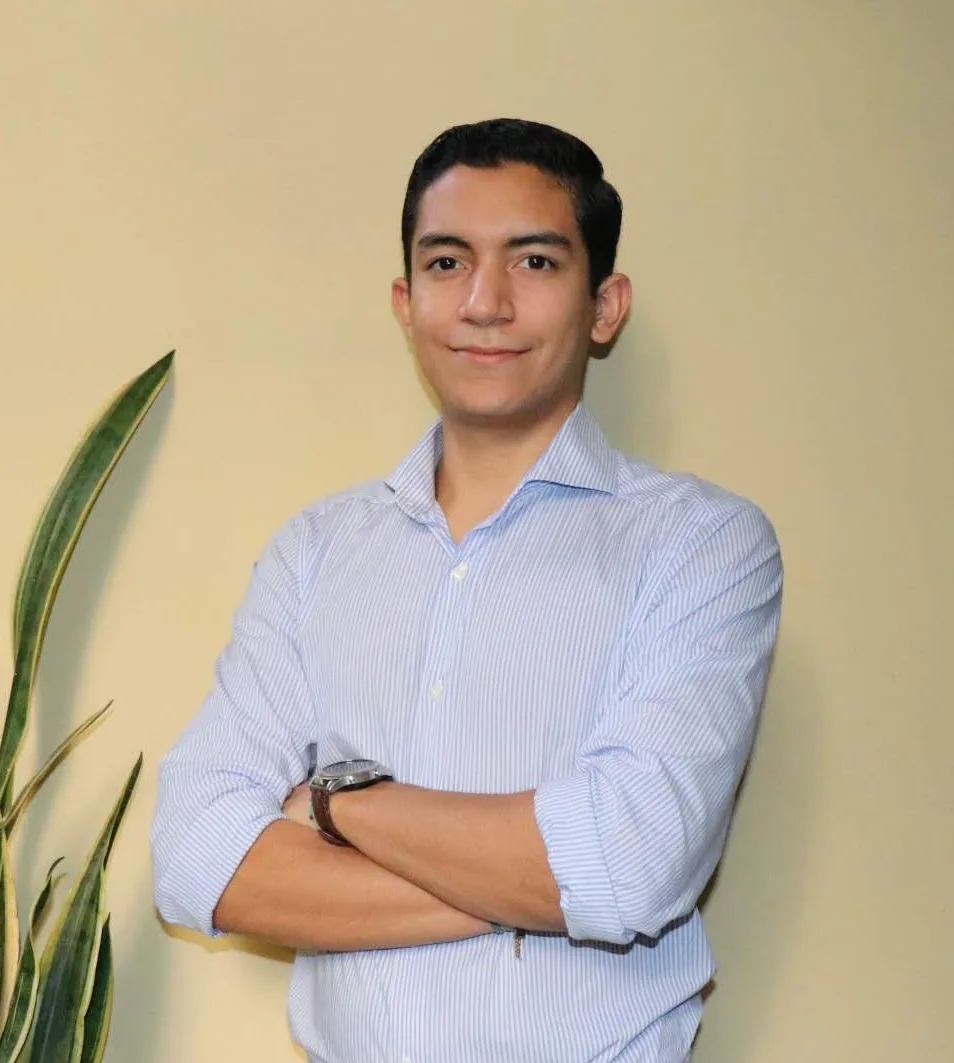
I am David Ramírez. At the time of this edition, I was nearing completion of Industrial Electrical Engineering at the Universidad Nacional Autónoma de Honduras (UNAH). I enjoy improving the automation and efficiency of systems. Spanish is my native language, I speak English, and I studied German to A2 level. I use Microsoft tools and software I learned during my degree, including Multisim, CADe SIMU, KiCad, Wolfram and SketchUp. At that time, I was completing a Python course; it is the programming language I know best. I want to keep learning programming and AI for their potential to create useful tools and improve our lives.
Sign up for the datathon!
The original announcement did not specify a registration date. Ask the team about upcoming activities.
The programme included a certificate recording the training hours.
Frequently asked questions and answers
Does the program include a certificate?
The programme offered a certificate recording the training hours for participants who completed the classes and presented their project at Demo Day. Ask the team about the current edition’s requirements and conditions.
Is the program only for the city of Tegucigalpa?
No. The online edition was designed for people interested in learning AI from different parts of the world. Ask the team about requirements for upcoming activities.
What is the minimum age to participate in the program?
The original announcement did not specify a minimum age. Ask the team about participation requirements, including consent and supervision requirements for minors.
Can I participate in the program if I don't have any programming knowledge?
The edition included preparation materials for registered participants. It is important to make time to practise and build the background skills the programme requires.
Is the program focused only on people in the area of computer science and systems engineering?
No, everyone is welcome to participate in the program.
More questions? Contact the team
Communities & Partners
Our local and global partners help us expand opportunities to learn AI.