La Paz
This page includes programme information from our community archive. Contact the team to confirm current dates, availability and requirements.
Saturdays.AI
La Paz
Learn Artificial Intelligence with us!
When: August, according to the original announcement (year not specified)
Where: online
Programme: second deep learning edition (archive)
Original announcement for the second edition

Course structure:
Code2Learn

During the first half of the program you will learn the fundamentals of Machine Learning with practical programming exercises. In addition, our AI-specialized mentors will share their experiences and success stories.
Build2Learn
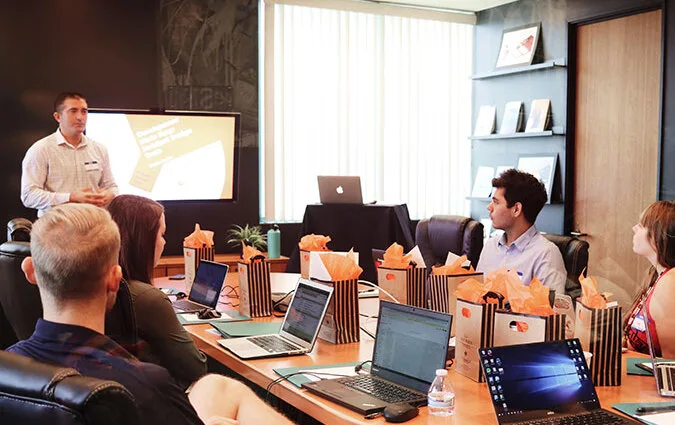
In the second half of the programme, you will develop AI models to address a specific problem, with support from our mentors.
Demo Day

At the end, each team will present its project at Demo Day to share its achievements and what it has learned.
Curriculum:
Fundamentals of deep learning
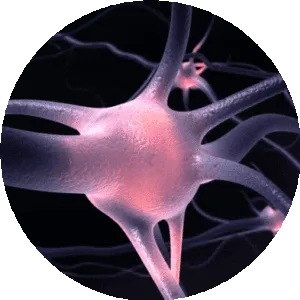
We will explore the mathematical foundations of neural networks and build a network using Python, PyTorch and TensorFlow. We will also study optimisation and regularisation.
Convolutional neural networks

To work with images, we will study convolutional neural networks (CNNs), classic architectures and transfer learning.
Recurrent neural networks

We will introduce natural language processing (NLP) through recurrent neural networks (RNNs), including networks with gates and memory cells.
Computer vision

We will continue working with images by applying filters, detecting edges and objects, and learning about the You Only Look Once (YOLO) algorithm.
Advanced topics

We will explore sequence-to-sequence models, attention mechanisms and transformers.
Unsupervised deep learning

We will study latent spaces and the foundations and architectures of generative adversarial networks (GANs).
Cloud computing for deep learning

We will learn the foundations of cloud computing and how to deploy deep learning models with Amazon Web Services.
Ethics for artificial intelligence
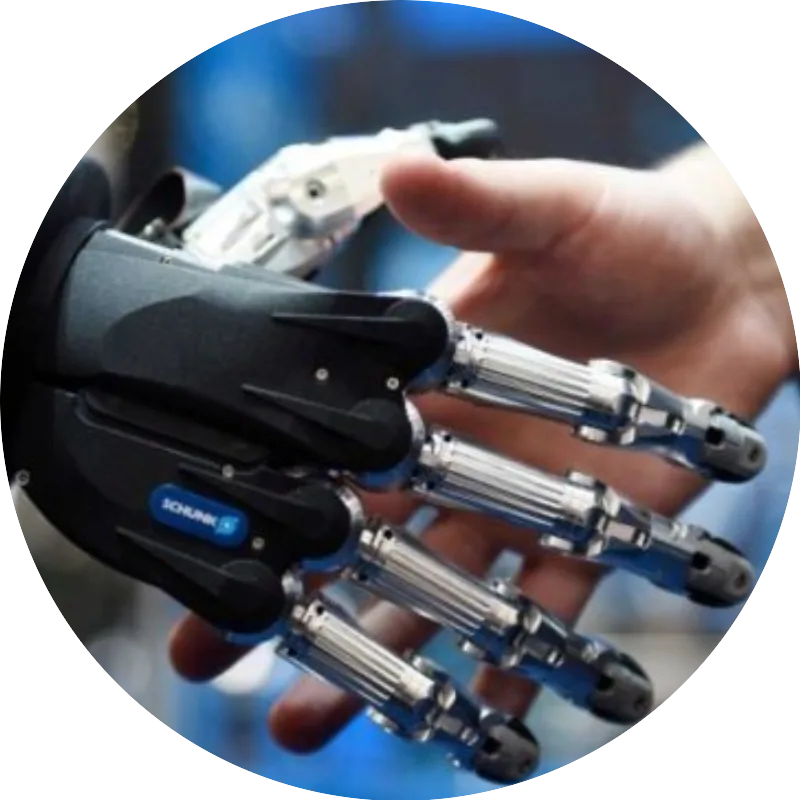
AI affects people and society. This module explores appropriate uses, possible risks and our responsibilities when developing these systems.
Artificial intelligence project

In this module, you will learn to develop a project using the programme’s concepts and present it at Demo Day.
Demo Day

At the end of the programme, each team will present its project at Demo Day and share what it has learned.
Team
Fernando Silva 🇧🇴
AI Saturdays La Paz lead


Biography from the original edition: Fernando is a systems engineer with a postgraduate qualification in Artificial Intelligence from the Universidad de Chile. He has worked in AI since 2019. He began as a Python and machine learning mentor with the Centro Cultural de España and worked in banking, implementing machine learning models. At the time of this edition, he was researching reinforcement learning at the Universidad Católica de Bolivia. He won a category at the Facebook F8 hackathon in Silicon Valley in 2019. He has led communities including GDG Android Bolivia, Data Science Bolivia, PyData La Paz and Kaggle Days La Paz to broaden access to AI. At that time, he also had a computer vision startup and was an ambassador for deeplearning.ai through its Pie & AI programme, founded by Andrew Ng.
Adriana Romero Soriano 🇪🇸
Research scientist and adjunct professor


Biography from the original edition: Adriana Romero Soriano was a research scientist at Facebook AI Research and an adjunct professor at McGill University. Her research develops models that learn from multimodal and real-world data, reason about conceptual relationships and recognise their uncertainty while addressing meaningful problems. She completed postdoctoral research at Mila under Yoshua Bengio, applying deep learning to biomedical challenges involving multimodal, high-dimensional and graph-structured data. She received her PhD from the University of Barcelona, supervised by Carlo Gatta, with a thesis on methods to support deep neural network training for computer vision. She has served on programme committees for ICLR, NeurIPS, ICML and CVPR. She co-organised WiCV at CVPR 2018, RLGM at ICLR 2019, SEDL at NeurIPS 2019, the Montreal AI Symposium 2019 and SEDL at ICLR 2021.
Rodrigo Beceiro 🇺🇾
Machine Learning, Deep Learning, Data Science

Biography from the original edition: Rodrigo is the founder and CTO of Marvik, a machine learning software company whose clients have included P&G, Stanford University and PedidosYa. Its specialities are computer vision, natural language processing and predictive analytics. He is a telecommunications engineer with a master’s in Technology Business Management from Universidad ORT Uruguay, a Scrum Master qualification and an AI Nanodegree from Udacity. At the time of this edition, his company was an ambassador for deeplearning.ai in Montevideo and participated in the AWS Activate, Google for Startups and NVIDIA Inception programmes.
Evelin Fonseca Cruz 🇨🇺
Machine learning engineering


Biography from the original edition: Evelin is a machine learning engineer with more than 15 years of experience in the software industry. She began her career teaching at the University of Havana and has also worked as a senior software developer and AI developer. At the time of this edition, she was pursuing her second master’s degree, in machine learning, at Mila.
Henry Ruiz 🇨🇴
PhD student at Texas A&M University at the time of this edition


Biography from the original edition: Henry is a Google Developer Expert (GDE) in Machine Learning, a computer science engineer and a master’s graduate in Artificial Intelligence from the Universidad Autónoma de Baja California. At the time of this edition, he was a research associate and PhD student at Texas A&M University. He had more than ten years of software development experience and a strong interest in open-source projects. Over the preceding three years, his research had explored machine learning and deep learning applications in agriculture. His postgraduate research combined geophysical tools such as ground-penetrating radar with mathematical simulation, electromagnetism, signal processing and machine learning.
Mercè Vintró Ricart 🇪🇸
NLP data scientist


Biography from the original edition: Mercè was a senior computational linguist in Shell’s Data Science R&D team. She holds a degree in Translation and Interpreting from Universitat Pompeu Fabra and a master’s in Speech and Language Processing from the University of Edinburgh. Before joining Shell, she worked as an R&D engineer in London startups, applying natural language processing (NLP) to real-world problems. She joined Shell in 2018 and led the development of NLP capabilities at its Digital Centre of Excellence. She also contributed to machine learning and deep learning projects for NLP. In her free time, she enjoys travelling, riding horses and playing the piano.
Danna Calle
Fernandez 🇧🇴
Agile methods, user experience and virtual reality
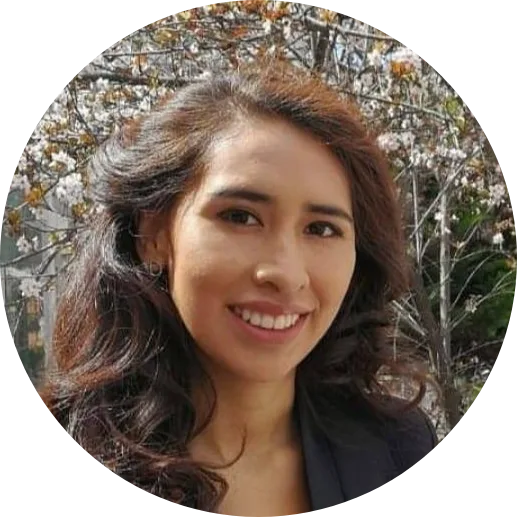
Biography from the original edition: Danna had volunteered with non-profit organisations for more than seven years. She was one of 140 people selected for the Global Entrepreneurship Summer School in Mexico and received a scholarship for a high-impact entrepreneurship programme in New York the following year. Her biography reports first prizes in both programmes for social technology projects supporting farmers and children with attention difficulties. She is the founder or co-founder of Aurorasoft, Qhali, Iris360grados and Human Design Group. She graduated in Commercial Engineering, with a minor in brand creation at the Universidad Católica, and was pursuing a master’s in digital business at the time of this edition. She shares her experience through talks on agile methods, technology, management, social entrepreneurship and gender. Her biography records five first prizes at startup weekends and hackathons. She believes in multidisciplinary teamwork and understanding people with empathy before designing solutions.
Felipe San Martín
Vásquez 🇨🇱
Computer vision engineering

Biography from the original edition: Felipe holds an engineering degree and a master’s in Electrical Engineering from the Universidad de Chile. He spent more than four years on computer vision R&D projects, developing industry applications in an academic setting. He also taught on Duckietown Engineering Chile, a mobile robotics course at the Universidad de Chile, focusing on computer vision and machine learning. At the time of this edition, he was president of Corporación Cuac, a non-profit organisation teaching and sharing knowledge about robotics, AI and data science, and a computer vision engineer at TOC Biometrics.
Sofía Trejo 🇲🇽
Ethics of Artificial Intelligence, Theoretical Mathematics, Dynamic Systems

Biography from the original edition: Sofía was born and raised in Mexico City. She studied Mathematics at UNAM and received her PhD in Mathematics from the University of Warwick. She has conducted research at the University of São Paulo and Imperial College London. Her work addresses AI ethics. She led research for the Ethics Group of Mexico’s National Artificial Intelligence Agenda, worked with Conacyt’s Artificial Intelligence Alliance and participated in the Montreal AI Ethics Institute’s Learning Community project. She has organised and taught specialist seminars at Mexican universities and contributed to international AI reports. Her interests include the relationships between AI, human rights and gender, and improving public understanding of technology.
Original edition announcement
The original edition was fully booked
Original registration period: 27 April to 25 May
Original course dates: 27 May to 3 July
Tuesday, Thursday and Saturday
Format: online
Schedule: Tuesday (21:00 – 22:00), Thursday (19:00 – 22:00), Saturday (09:00 – 12:00) UTC – 4 (Bolivian time)
The programme included a certificate recording the training hours.
AI Saturdays La Paz Deep Learning
Download our brochure for more detailed information about our Deep Learning program.
Learn about the program in detail
Frequently asked questions and answers
Does the program include a certificate?
The programme offered a certificate recording the training hours for participants who completed the classes and presented their project at Demo Day. Ask the team about the current edition’s requirements and conditions.
Is the program only for the city of La Paz?
No. The online edition was designed for people interested in learning AI from different parts of the world. Ask the team about requirements for upcoming activities.
What is the minimum age to participate in the program?
The original edition required participants to be at least 18. Ask the team about requirements for upcoming activities.
Can I participate in the program if I don't have any programming knowledge?
The edition offered preparation materials for registered participants. Ask the team about the programming skills required for each programme.
Is the program focused only on people in the area of computer science and systems engineering?
No, everyone is welcome to participate in the program.
More questions? Contact the team
Our community
Our local and global partners help us expand opportunities to learn AI.




Our partners