Deep Learning applied to early detection of forest fires
A Saturdays.AI La Paz project compares a custom CNN with VGG-16 to recognise smoke in images and explore early wildfire detection.
A learning project shared by the community. The article documents its team, methods and results; it does not establish that the prototype is ready for real-world use.
La Paz. Second Edition. 2021
Wildfires can destroy forests, homes and habitats, damage livelihoods and cause loss of life. These consequences motivate efforts to develop tools that help detect fires early.
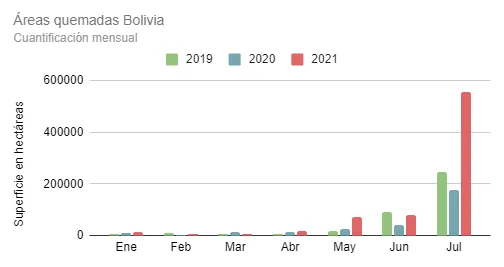
As can be seen in Fig. 1 in Bolivia, in the last seven months this phenomenon has alarmingly multiplied the affected area due to multiple factors. Fig. 2 shows some of the causes studied for forest fires. Another important factor identified is climate change, which due to the increase in temperature in the affected places, increases the affected areas alarmingly.
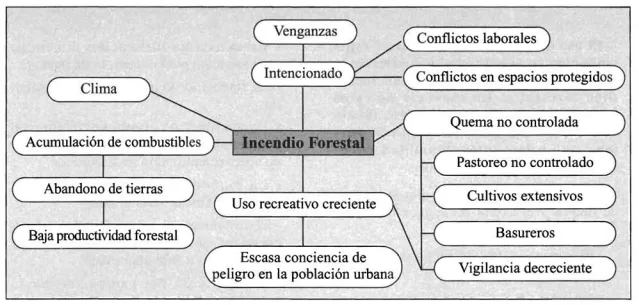
Fig. 2 Identified causes of forest fires (Vélez)
Due to the consequences of uncontrolled or unplanned forest fires, different strategies must be taken to mitigate their occurrence in protected or prohibited areas for this activity.
Problem description
Based on what was mentioned above, the following problem arises:
How to identify uncontrolled forest fires in a timely manner to minimize their impact?
General objective
The general objective is to implement a model of Deep Learning for early detection of forest fires by recognizing smoke in flat/forested areas using images of the scene.
The following graphic shows the central idea of the project.
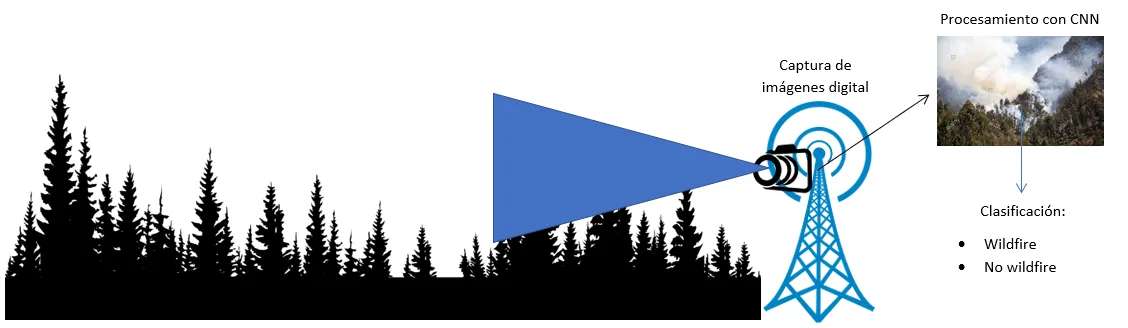
Fig. 3 Project proposal
Information collection
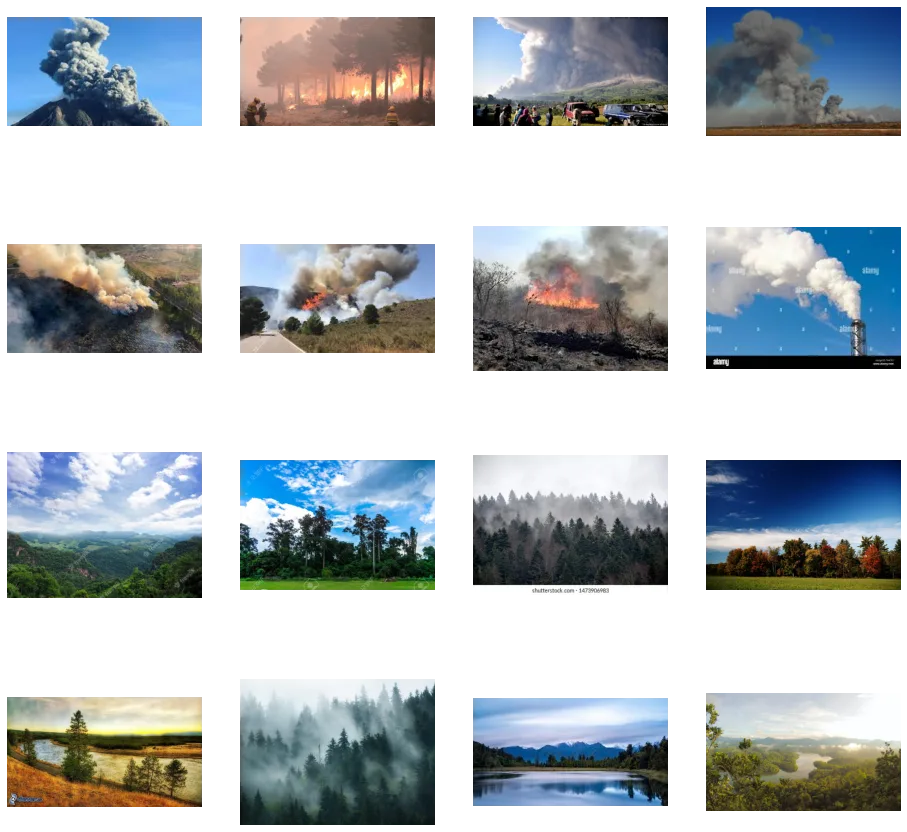
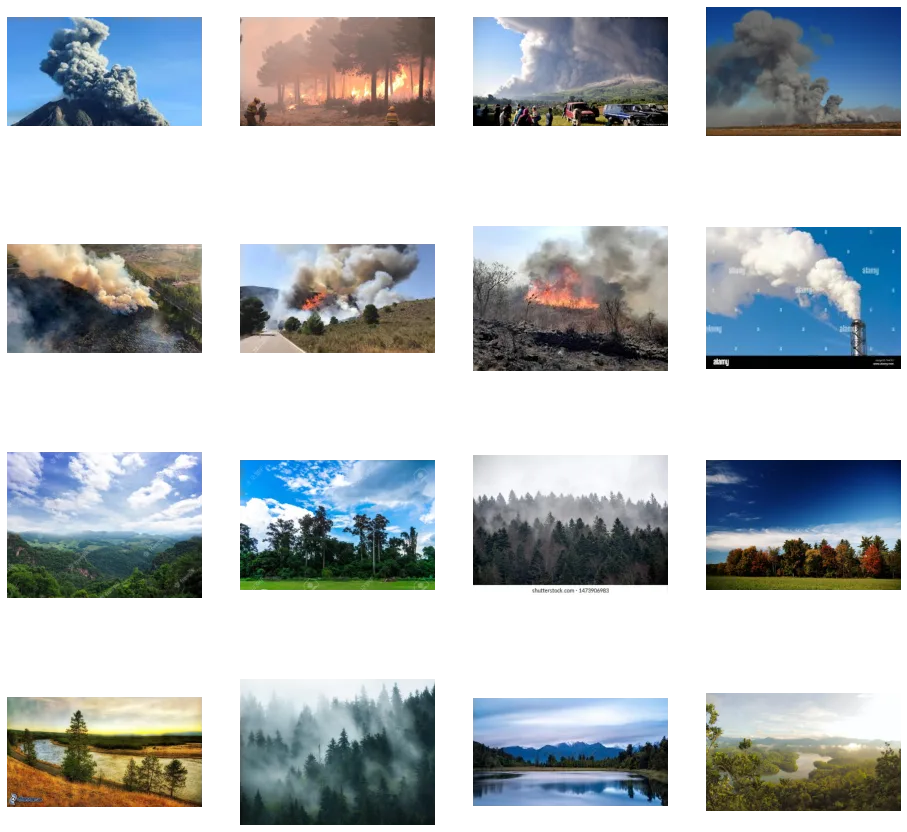
The dataset to train the models was created by downloading images classified as “forest fire” (images taken in perspective with the presence of smoke in forest areas) and “non-forest fire” (images taken in perspective in forest areas without the presence of smoke or fire).
The downloaded images (4 groups of images) were taken to a repository GitHub for easy import into Google Colab.

Print of the first 8 training images and first 8 validation images:
Model selection
The selection of models is based on the following considerations:
- Ease of implementation.
- Model performance.
- Calculation limitation.
These considerations are due to the resources available to achieve the general objective. The models to be developed are:
- Custom CNN
- VGG-16
Techniques implemented
The main technique used to compensate for the limited dataset size due to the limitation of Google image search was “data augmentation” made by the bookstore keras “ImageDataGenerator”.
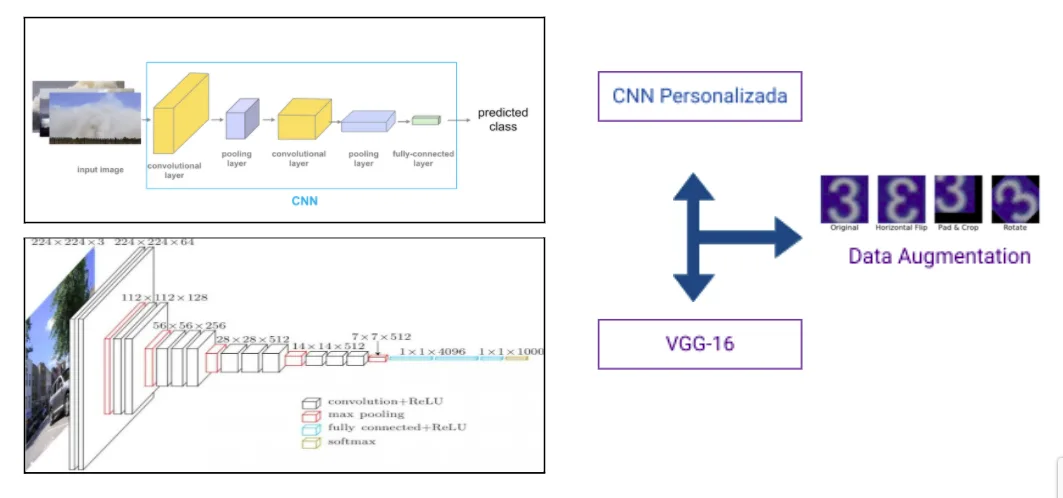
Fig 5. Data Augmentation
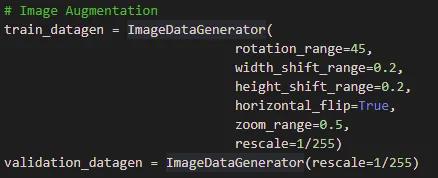
Fig. 6 ImageDataGenerator in Keras
Model evaluation
1. Custom CNN
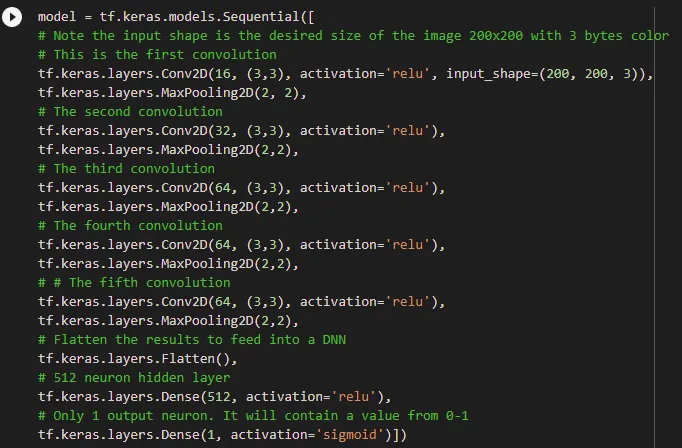
2. VGG-16

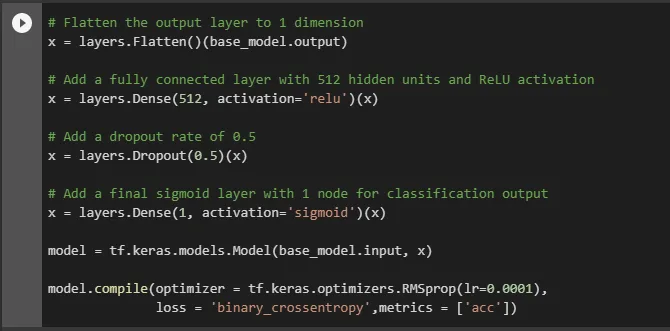
Analysis of results
Below are the results of the model Custom CNN and VGG-16.
1. Precision and ROC curve of cnn custom:
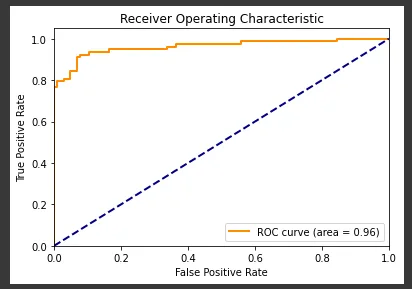
Custom CNN ROC Curve
2. Precision and ROC curve of VGG-16:

Accuracy of VGG-16.
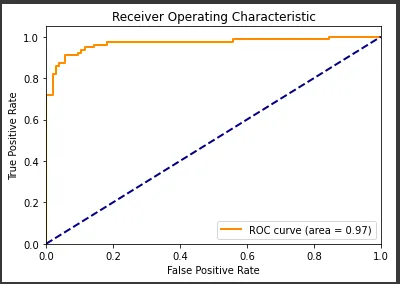
ROC curve of VGG-16.
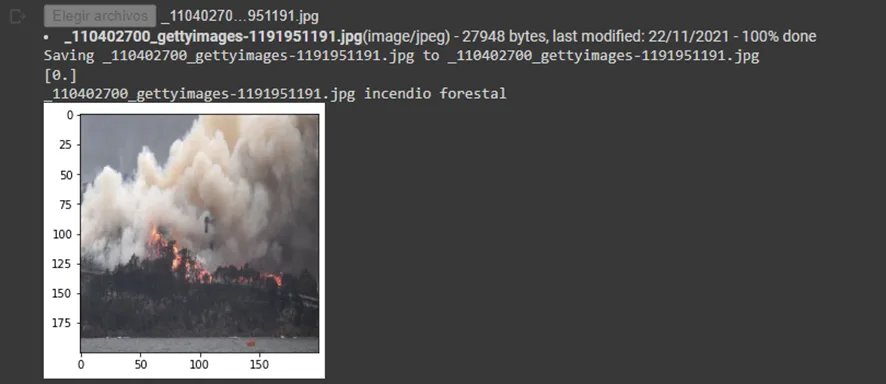
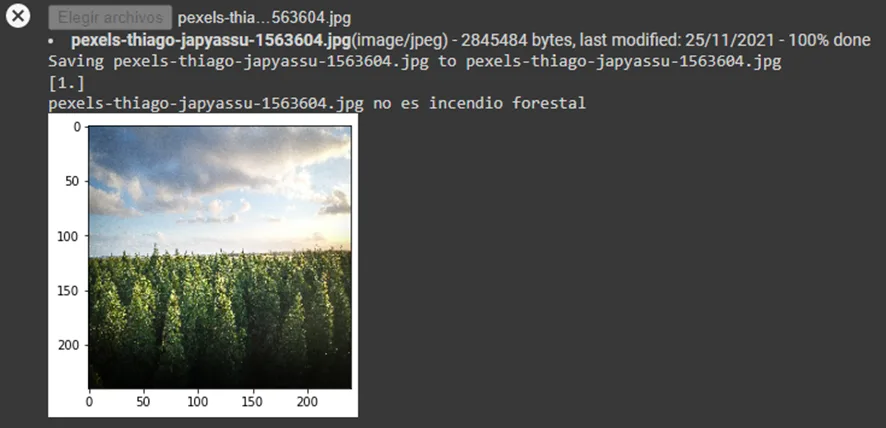
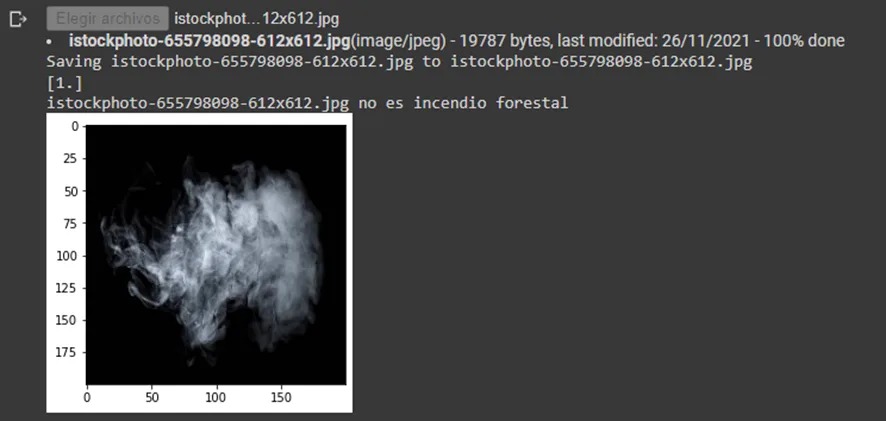
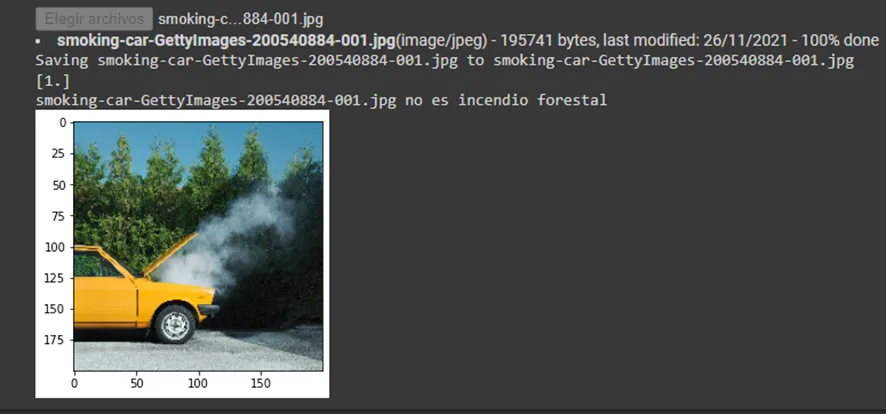
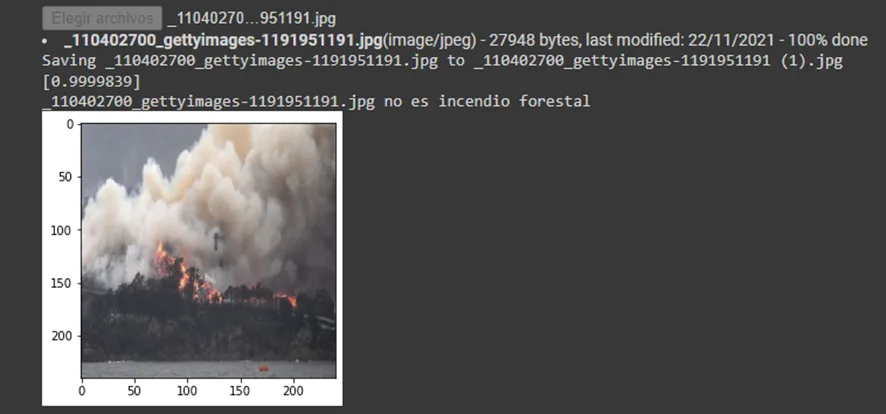
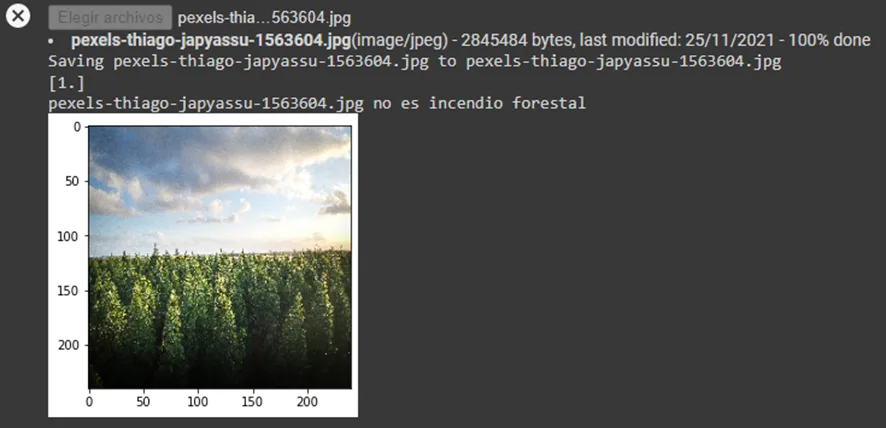
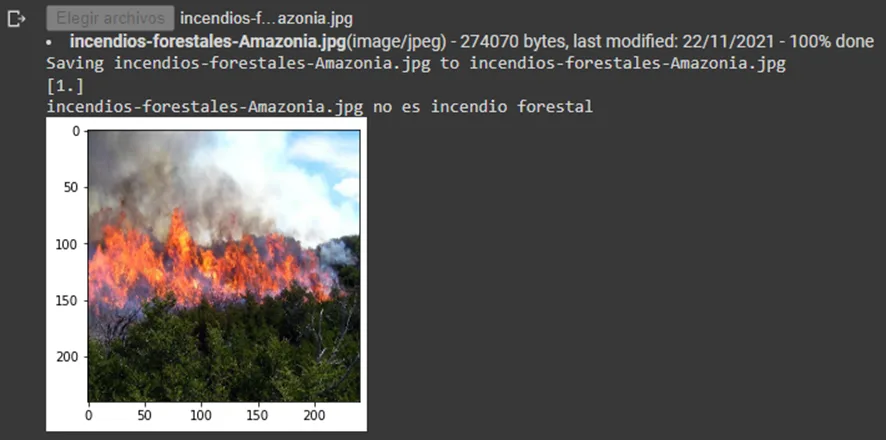
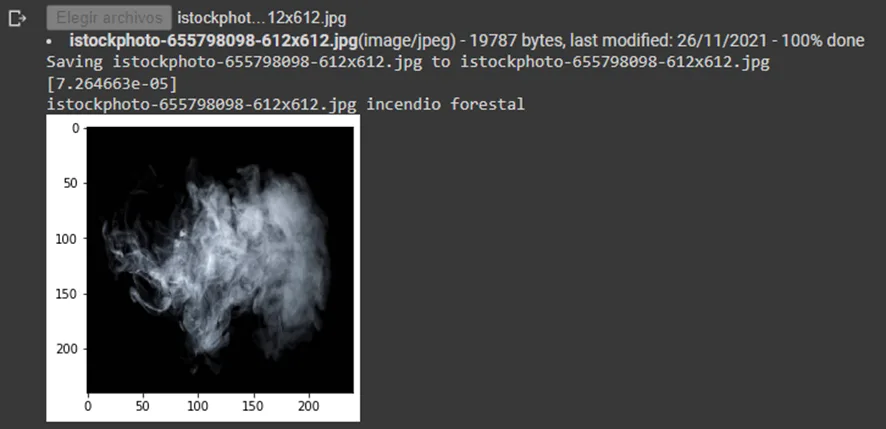
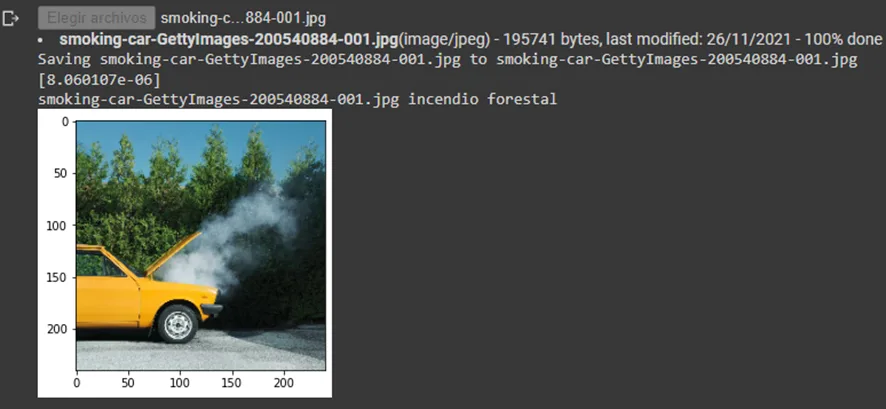
Model predictions below:
1. Custom CNN
2. VGG-16
Conclusions
The model cnn produced promising results in the project tests. The model VGG-16 requires further adaptation from its pretrained form. A Deep Learning architecture does not necessarily perform better simply because it is more complex.
The results suggest a possible supplementary tool for detecting signs of fire. Its performance in real conditions would require further evaluation.
Deep learning models can be explored as support for responses to environmental problems, alongside existing systems and professionals.
Members
Project presentation: DemoDay
More Artificial Intelligence!
Saturdays.AI makes AI more accessible through shared learning and projects with a social purpose. Our motto is AI4ALL IS AI4GOOD.
A story from the Saturdays.AI community. Originally published on March 9, 2022.
← More community stories