Artificial Intelligence and Social Networks
How recommendation algorithms shape social media, and the challenges they create for privacy, diversity and moderation.

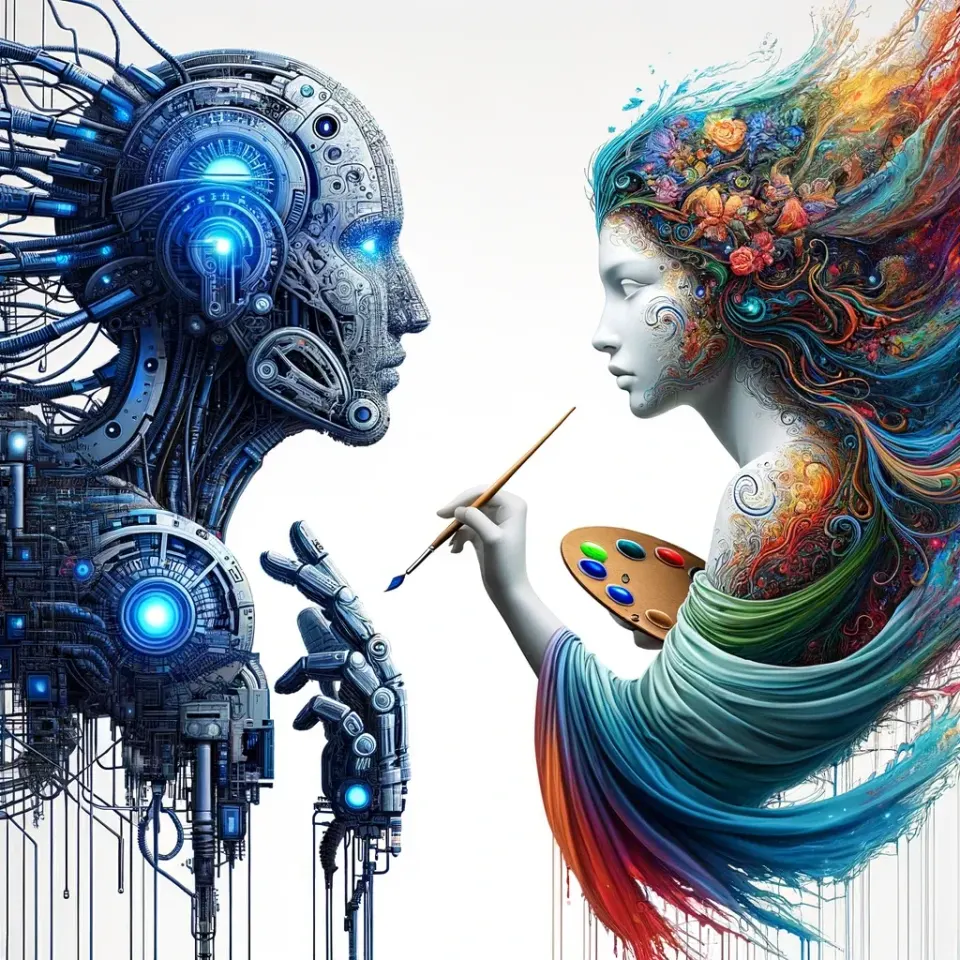
Banner generated with Lexica Aperture V2 AI. “The image of a cypherpunk person’s head. Instead of a brain, the person has a representation of artificial intelligence and a representation of social networks. Both of these representations are in the process of fusing”
Artificial intelligence (AI) and machine learning (ML) have changed how social media works and how platforms select the content we see. This article explores their benefits, risks and the choices that can help create a more useful and safer experience.
Improving user experience through AI and ML
First of all, it is important to highlight how AI and machine learning have improved the user experience on social media platforms. The AI systems analyse user data, such as their interests, the content they consume and their interactions, as well as the preferences of users with similar interests. In this way algorithms can offer personalized recommendations that are relevant to each person. This approach helps users discover content they may enjoy and can increase the time they spend on the platform.
Risks of AI in social networks
However, there are a number of risks associated with using AI on social media. One of the main challenges is the creation of filter bubbles. AI algorithms, designed to learn from the data provided, can reinforce users' existing opinions and preferences by exposing them only to similar content.
Training data, system objectives and users’ choices all influence recommendations. Under certain conditions, this can limit exposure to different perspectives. The relationship with polarisation is complex and cannot be explained by the algorithm alone.
AI algorithms and extremist content
Recommendation systems have also faced political and legal scrutiny over allegations that they recommended videos. These cases raise questions about the amplification of harmful content, platform responsibility and the effectiveness of moderation. Assessing those risks requires studying how a system actually operates and what effects it has.
Privacy and data security on social networks
Another problem related to AI in social networks is the privacy and security of user data. Social media platforms collect large amounts of personal data to feed and train their algorithms, raising concerns about information protection and data misuse. The lack of transparency regarding the operation and training of these algorithms also makes supervision and control by users and authorities difficult. Twitter published part of its recommendation system’s code in March 2023, shortly before this article was published. Releasing code can improve transparency, but it does not mean all data is available or that a production system can be fully reproduced.
AI and the future of social networks
AI can also help detect harassment and hate speech at scale. However, errors, differences between languages and missing context make human review and appeals essential. Improvements should be measured both by the ability to identify abuse and by respect for legitimate expression.

Conclusions and solutions for AI challenges in social networks
AI and machine learning offer new ways to discover content, but also raise challenges for privacy, diversity and moderation. Addressing them requires collaboration among developers, platforms, governments, researchers and the people who use these systems.
Prevention measures:
Improve the transparency of algorithms: By making algorithms more transparent, users and authorities will be able to better understand how they work and make informed decisions about the use of social media platforms.
Encourage content diversity: Ensure that algorithms do not reinforce information bubbles and promote a variety of perspectives and opinions.
Proactively address data privacy and security issues: Implement robust policies and practices to protect user information and ensure cybersecurity.
Establish an ethical framework for AI on social media: Create guidelines and regulations that promote responsible and ethical use of AI and ML on social media platforms.
Promote research and development in AI and ML: Promote innovation and continuous improvement of AI and ML technologies in the field of social networks.
Improving social media means evaluating both the benefits and unintended effects of AI. Transparency, data protection and user participation can help reduce risks and guide technology towards safer, more useful experiences.
More artificial intelligence
Saturdays.AI makes AI more accessible through shared learning and projects with a social purpose. Our motto is AI4ALL IS AI4GOOD.
Become a premium member of Saturdays and you will be able to take advantage of all the benefits of a leading community in Artificial Intelligence: https://saturdays.ai/become-a-member
Meet the Saturdays.AI community
References
Mage, 2022. Youtube’s Machine learning (ML) algorithm
Robert Barnes, Gerrit De Vynck, Cristiano Lima, Will Oremus and Amy B Wang. Washington Post, 2023. Supreme Court considers if Google is liable for recommending ISIS videos
Twitter, 2023. Twitter algorithm
A story from the Saturdays.AI community. Originally published on Apr 11, 2023.
← More community stories