AI and content creation: copyright at stake?
A 2023 reflection on creativity, authorship and AI-generated content: arguments in the debate and questions that need to be kept distinct.
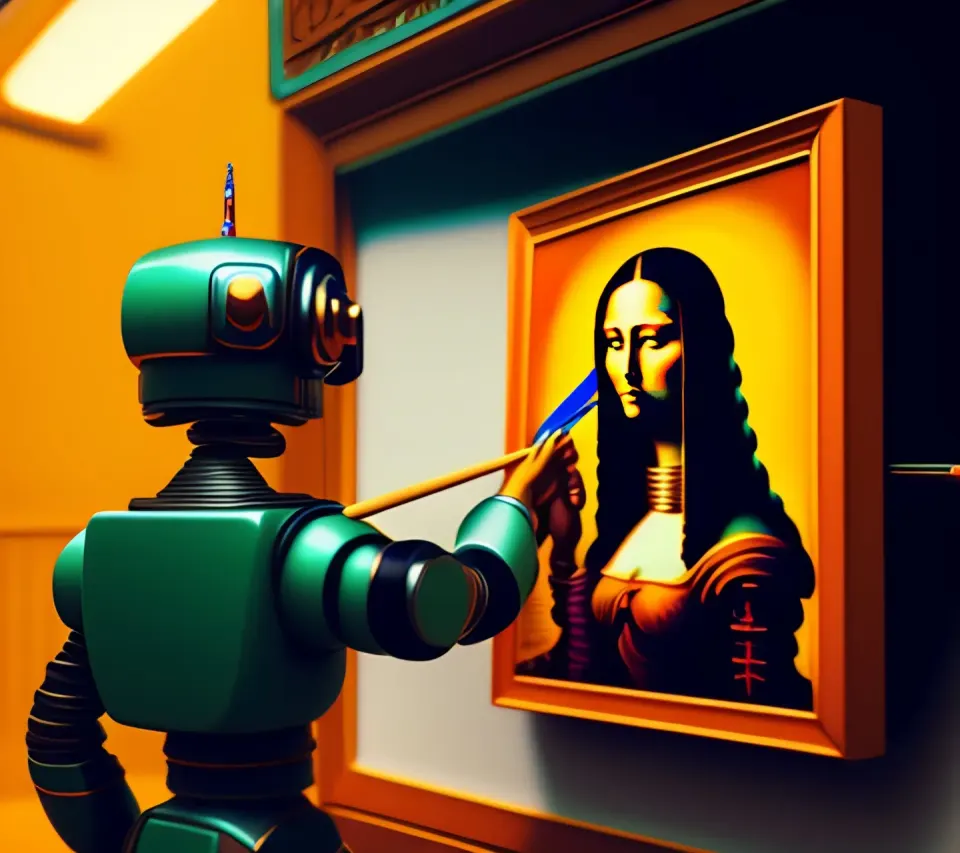
Prompt: an illustration of Bender, the robot from Futurama, as a painter, holding a brush beside a canvas showing a robotic Mona Lisa.
Introduction: Content Creation in the Age of AI
The artificial intelligence (AI) is changing how text, music and images are created and distributed. This article reflects the debate in 2023 and asks: Should AI-generated content be subject to copyright? This should be distinguished from a separate question: what permissions are needed to use protected works in training or in a new creation.
The Case That Triggered the Debate: Record Companies Against AI-Generated Music
One report cited when this article was published described record labels’ concerns about the use of their catalogues in AI systems and the distribution of. That dispute brings together different questions: rights over training material, possible imitation of artists and protection of the outputs. It does not amount to a general conclusion that all music made with AI lacks originality or copyright protection.
The Debate: Arguments for and Against Copyright Protection in AI-Generated Content
A. Advocates of copyright protection
- AI as a creative tool: AI is simply a tool that makes content creation easier. From this perspective, AI can be part of a human-directed process, like a musical instrument or editing software. The question is which human creative decisions and contributions are present in each result; starting a generation does not by itself settle authorship.
- Innovation and technological development: Another argument in favor of protecting AI-generated content is that this could boost innovation and the development of new technologies in the creative field. By providing a legal framework that supports investment in AI-based projects, research and the advancement of this technology in the creative field would be encouraged.
B. Critics of copyright protection
- Difficulty in attributing authorship: One of the main arguments against copyright protection for AI-generated content is that the authorship of this type of content is difficult to attribute, especially to a specific person, since it is an automated process. This raises the question of whether it is appropriate to copyright something that has not been directly created by a human being.
- Limitations on freedom of expression and access to information: Another argument against granting copyright to AI is that it could limit freedom of expression and access to information. By restricting the distribution and use of content generated by AI, the possibilities of access to new knowledge and forms of expression could be limited.
- Monopolies and inequalities: Another concern is that overly broad protection could concentrate rights in well-resourced companies, limiting opportunities for independent creators and smaller organisations.
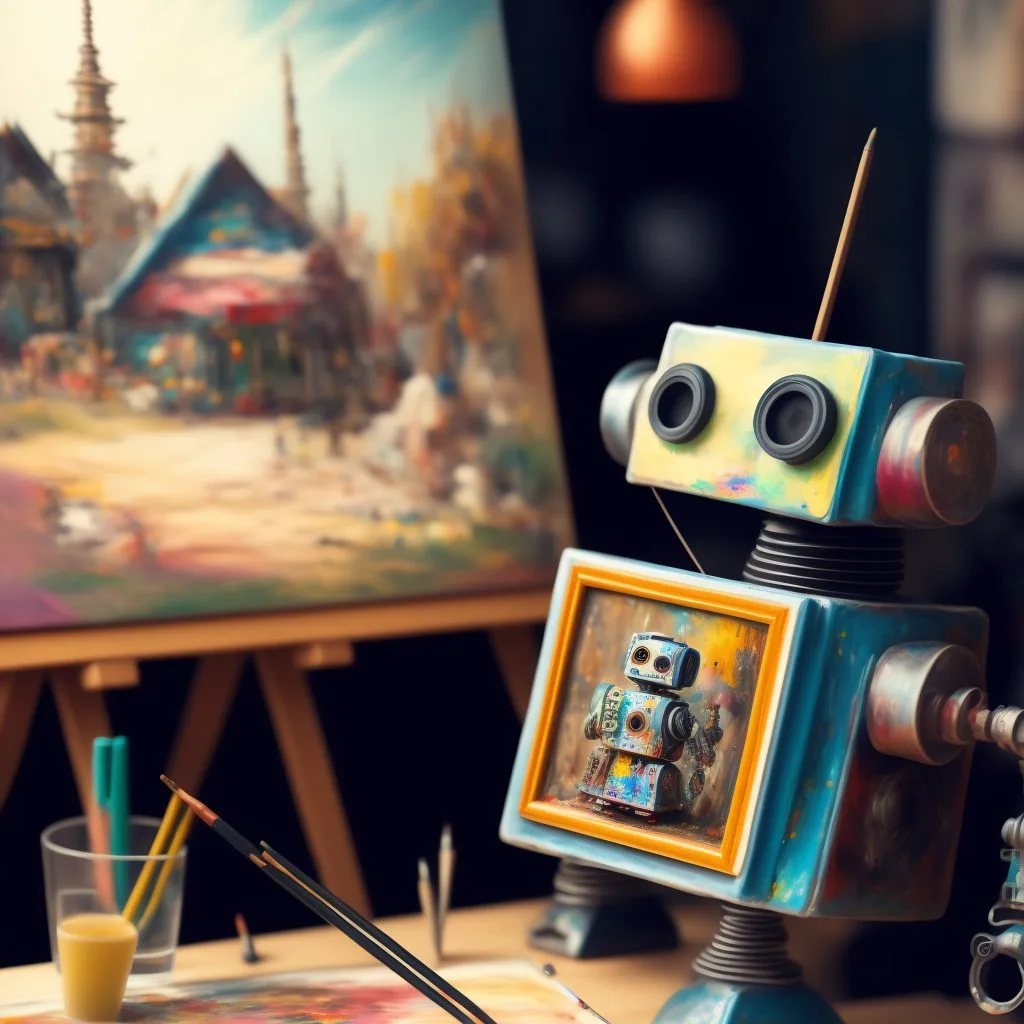
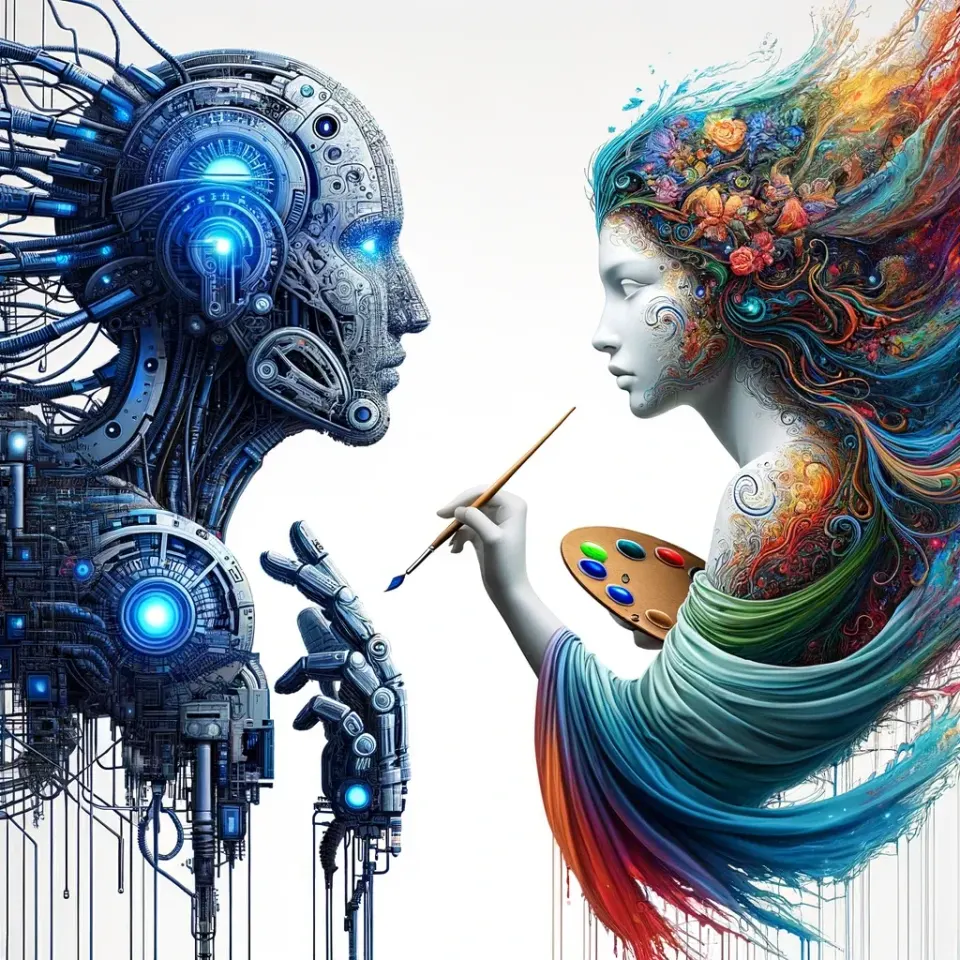
Prompt: a messy, chaotic artist’s workshop, with a friendly robot painting a picture of another robot.
Case Studies: Controversies and Advances in Content Creation Using AI
- AI generated music: Projects like OpenAI's MuseNet and Jukedeck have demonstrated the ability of AI to compose music in different styles and genres. However, some critics argue that these compositions lack the human and emotional essence present in music created by people.
- Texts and literature: OpenAI’s GPT-3 and GPT-4 are examples of how AI can generate coherent and relevant texts based on context. While some writers have used these tools to generate ideas and improve their work, others fear that AI could displace human authors and dilute literary quality.
Possible Solutions and the Way Forward
- Legal framework adapted to AI: One of the possible approaches to address the issue of copyright and AI is to develop a specific legal framework that takes into account the particularities of content creation using AI. This could include creating specific licenses, limiting the scope of copyright, or implementing attribution and compensation systems for the human creators involved in the process.
- Human-AI collaboration: AI can be seen as a tool that extends the creative capabilities of humans rather than replacing them. Encouraging collaboration between human creators and AI technologies can lead to new forms of expression and creation that benefit both.
Conclusion
The debate over whether AI-generated content should be subject to copyright is complex and requires a detailed analysis of the legal, ethical and economic implications. At Saturdays.AI, we promote learning and discussion of topics related to artificial intelligence, such as this one, with the goal of generating awareness and understanding of the challenges and opportunities presented by this constantly evolving technology.
Written by
Josep Moré Gili
References
Hattenstone, S. (2021). «The Guardian: Can an AI write a novel?» https://www.theguardian.com/books/2021/sep/11/can-an-ai-write-a-novel
Hernandez, J. (2021). "Record companies ask Apple Music and Spotify to block music created by artificial intelligence."https://computerhoy.com/streaming/discograficas-piden-apple-music-spotify-bloqueen-musica-inteligencia-artificial-1229296 “
OpenAI. (2019). “MuseNet”. https://openai.com/blog/musenet/
Heritage, S. (2023). “ChapGPT: Movie Script Written Entirely by AI”. The Guardian. https://www.theguardian.com/film/2023/mar/24/chapgpt-movie-script-ai
More artificial intelligence
Saturdays.AI makes AI more accessible through shared learning and projects with a social purpose. Our motto is AI4ALL IS AI4GOOD.
Become a premium member of Saturdays and you will be able to take advantage of all the benefits of a leading community in Artificial Intelligence: https://saturdays.ai/become-a-member
A story from the Saturdays.AI community. Originally published on Apr 24, 2023.
← More community stories