
AI in medicine: a digital bridge to restore movement
Gert-Jan Oskam’s case: a brain-spine interface and rehabilitation helped him regain some control of movement after a spinal cord injury.
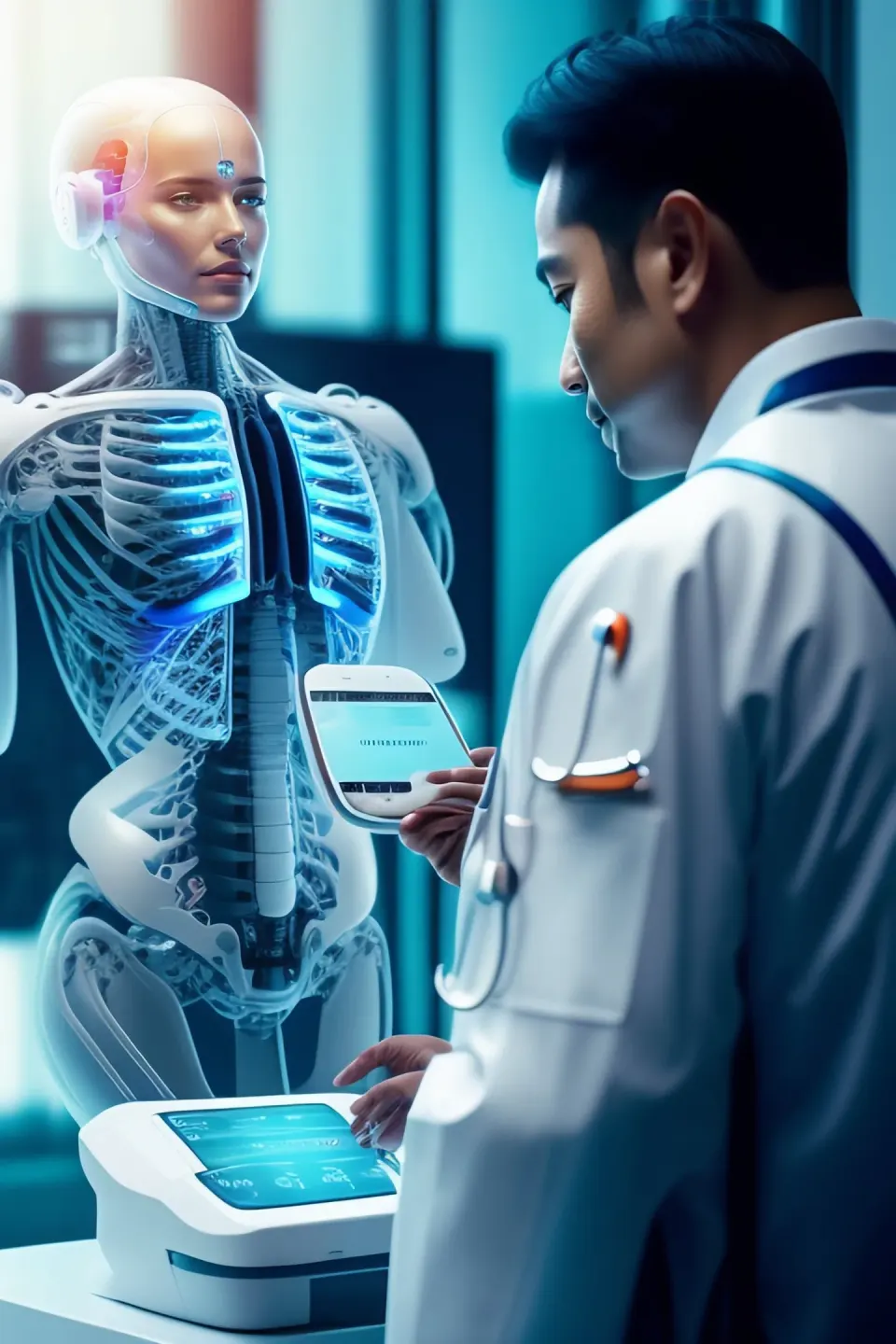
Prompt: autonomous medical care powered by artificial intelligence.
AI and the Recovery of Mobility: The Case of Gert-Jan Oskam
The artificial intelligence (AI) is revolutionizing numerous fields, including medicine. In May 2023, a study published in Nature described how a Swiss and French team enabled a man with a spinal cord injury to walk again using crutches through a brain-spine interface and rehabilitation. This was an advance in one participant, not an established cure for all spinal cord injuries.
The participant is Gert-Jan Oskam, a Dutch man who was 40 in 2023 and had sustained a spinal cord injury in a cycling accident twelve years earlier. A technology connecting signals from his brain to spinal cord stimulation, known as a brain-spinal cord interface, helped him regain some voluntary control of leg movement.
Brain-Spinal Cord Interface: AI Innovation in Neurology
The device, developed by a team of researchers led by neuroscientist Grégoire Courtine at the Swiss Federal Institute of Technology in Lausanne, uses two disc implants that are inserted into the skull, with two networks of 64 electrodes that rest against the membrane covering the brain. When Oskam thinks about walking, Skull implants detect electrical activity in the cortex, the brain’s outer layer. The signal is sent wirelessly to a processing unit that decodes movement intentions and sends commands to a pulse generator connected to electrodes that stimulate the spinal cord.
The difference is that brain signals allow stimulation to follow the intended movement. Oskam described a more natural sense of control than with earlier systems. This does not mean that he controls every technical parameter of the device.
AI in medicine: Other approaches
Continuing with the advances of artificial intelligence in biomedical engineering, there are numerous areas in which this revolutionary technology can be applied, beyond the brain-spinal cord interface. AI is demonstrating its ability to transform not only spinal cord injury treatments, but also other spheres of human health and well-being.
An emerging application of AI in biomedical engineering is the creation of smart prostheses. These devices use machine learning algorithms to adapt to the user's movements and improve comfort and functionality. Smart prostheses can, for example, automatically adjust joint stiffness and cushioning to adapt to different terrain and walking speeds. These algorithms learn from the user's movement patterns, allowing for more personalized and effective fit.
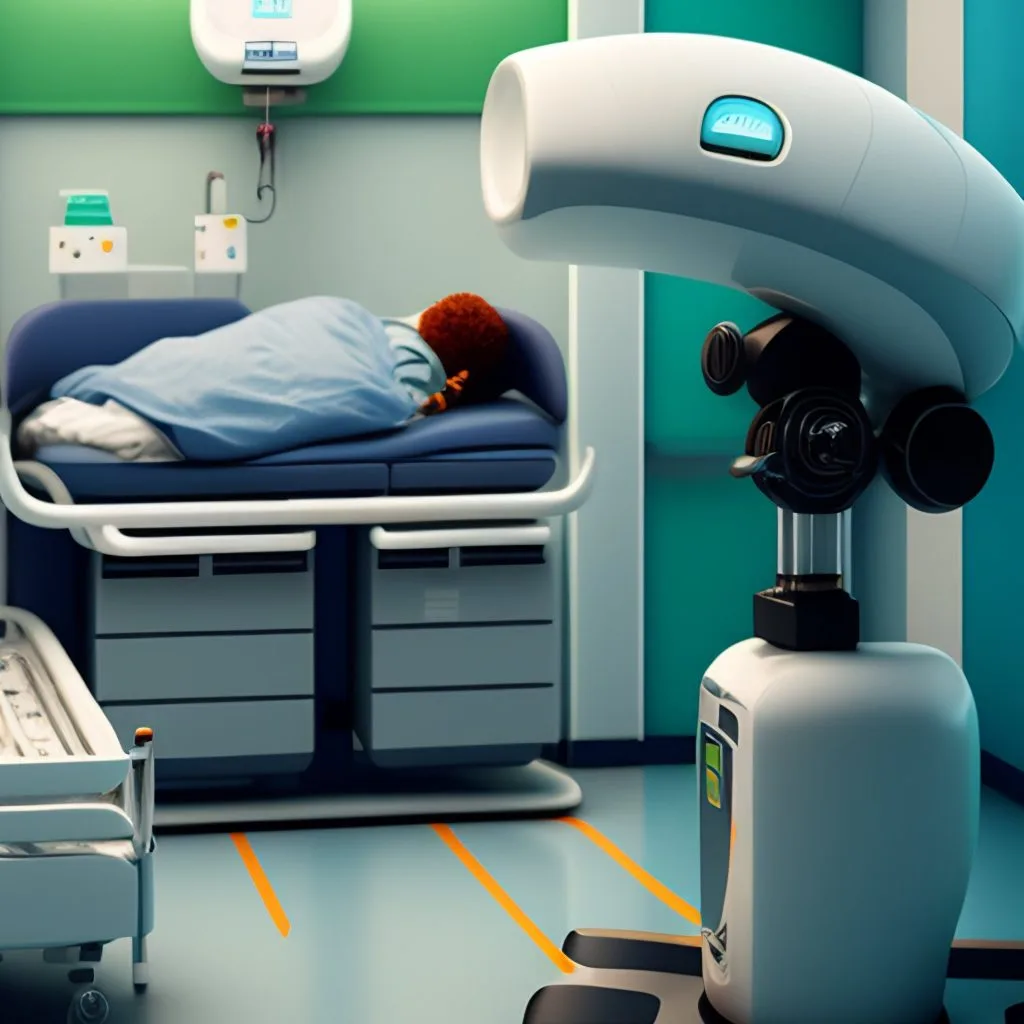
Prompt: a medical robot and a hospital.
Precision Medicine: AI Identifying Genetic Variants
Additionally, in the field of precision medicine, AI is revolutionizing the way we understand and treat diseases. With the analysis of large genomic data sets, AI can help identify genetic variants that contribute to specific diseases. This can lead to more personalized and effective therapies for patients. Machine learning algorithms are also being used to predict disease progression, which can inform treatment decisions and improve outcomes for patients.
Another important application of AI in biomedical engineering is in the field of medical imaging. Deep learning algorithms can be trained to identify features in medical images, such as tumors in MRIs or anomalies on x-rays. These algorithms can help doctors quickly identify health problems and make more informed treatment decisions.
AI is also being studied to support treatment selection. For example, it can analyse genomic and clinical data to study responses to particular medicines. Detecting an association does not guarantee an effective treatment: usefulness must be established through appropriate studies and clinical oversight.
Ethics and Privacy: Challenges in the Use of AI in Health
In short, artificial intelligence is transforming biomedical engineering in numerous ways. From improving the functionality of prosthetics to personalizing medical treatments, AI is proving to be a powerful tool in the healthcare field. However, with these innovations come important ethical and privacy considerations that must be addressed. But one thing is clear: AI has the potential to radically change the way we care for our health and well-being.
Written by
Josep Moré Gili
More artificial intelligence
Saturdays.AI makes AI more accessible through shared learning and projects with a social purpose. Our motto is AI4ALL IS AI4GOOD.
Become a premium member of Saturdays and you will be able to take advantage of all the benefits of a leading community in Artificial Intelligence: https://saturdays.ai/become-a-member
A story from the Saturdays.AI community. Originally published on June 1, 2023.
← More community stories