Machine learning in the textile industry
La Paz. 2021 The project began with this question: Will it be possible to improve decision making in the textile industry with Machine Learning? After deciding that we wanted to answer the question, we decided on the industry and…
A learning project shared by the community. The article documents its team, methods and results; it does not establish that the prototype is ready for real-world use.
La Paz. 2021
The project began with a question: can machine learning improve decision-making in the textile industry? We chose this sector because of its importance to Bolivia and the challenges identified by the team, including competition from imports and informal trade. Our aim was to explore productivity prediction using a publicly available dataset.
- Illegal merchandise entering the country
- Used clothes
- Chinese garments
Because we saw these problems and believe that Bolivia can improve its competitiveness, we chose the textile industry sector to apply Machine Learning.
DEVELOPMENT
We found the dataset on Kaggle, it had the following variables (they are translated into Spanish next to it):
date – Date()
smv – average value per job
day – Day (Mon-Sun)
wip – queued jobs
quarter – 5 periods / month
over time
department – department
incentive – incentive
teamno – Team #
idle time – idle times
no of workers – # of workers
idleman – # of idle workers
no of style change – # of changes
current productivity – current productivity
targeted_productivity – expected productivity
After exploring the variables in the Kaggle dataset, we found missing values in SMV. We examined its distribution and chose to replace those values with the mean to prepare the data for modelling.
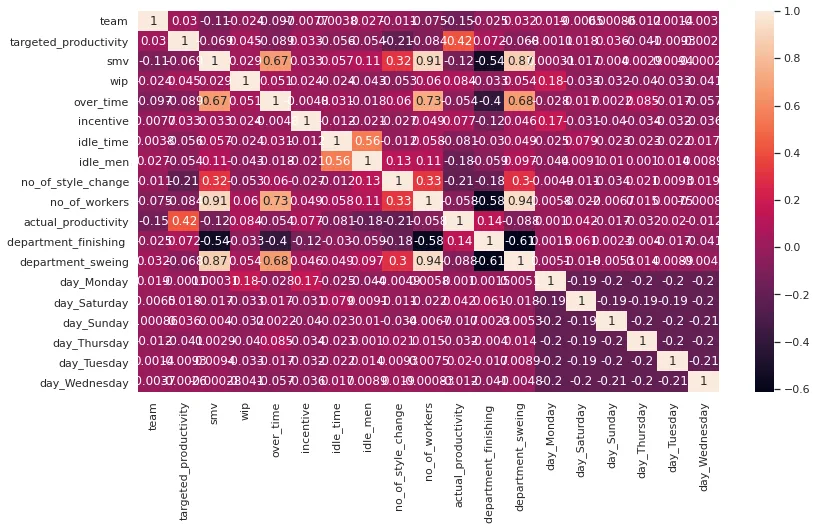
We initially framed the task as regression, but the early results were unsatisfactory. We decided to turn the target into categories and try classification models. We normalised the data and examined the correlation matrix shown below.
We then tested several classification models. AdaBoost achieved the best predictive result in our evaluation.
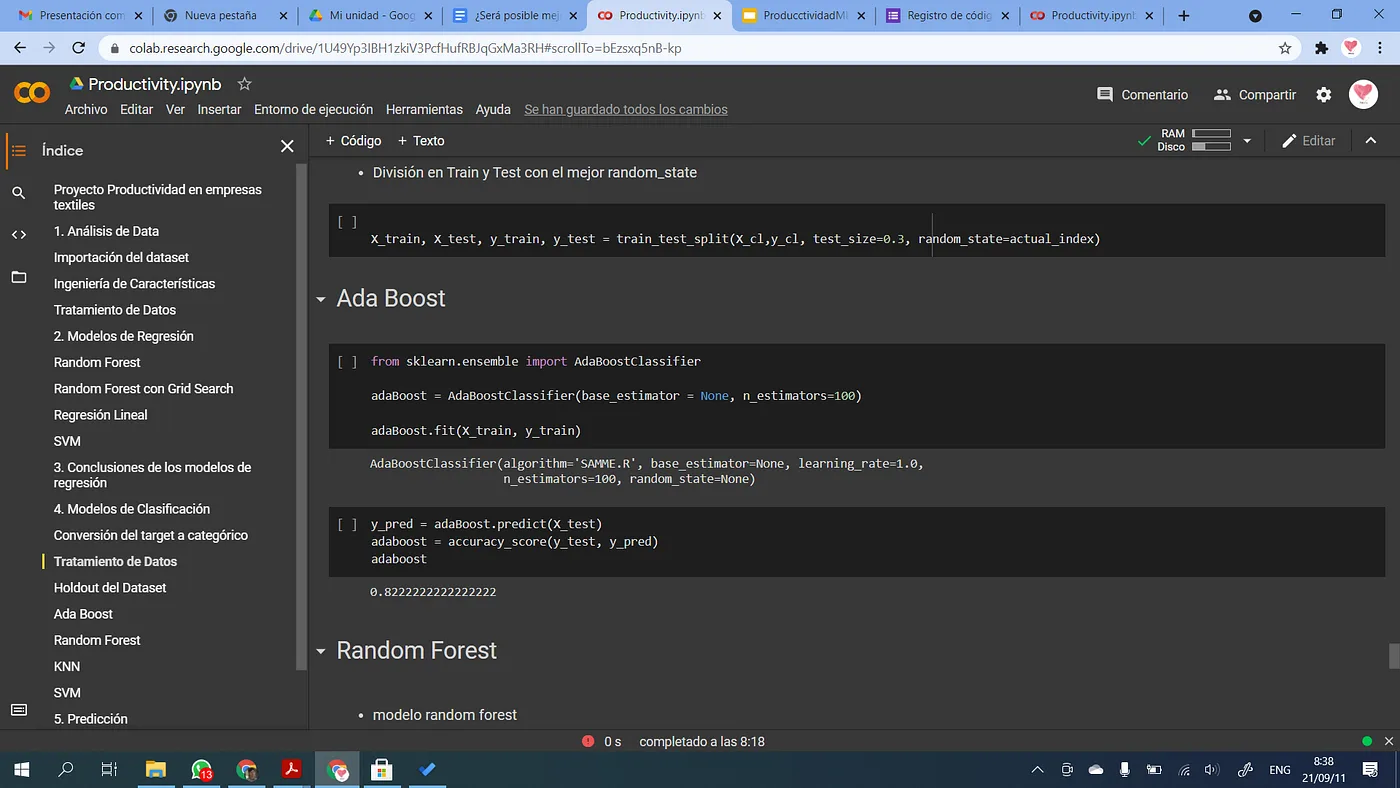
We achieved an accuracy of 0.82 which was simply incredible. After seeing how other methods did not even reach 0.50, we decided to try several additional models such as Random Forest, but the precision was lower (not by much).
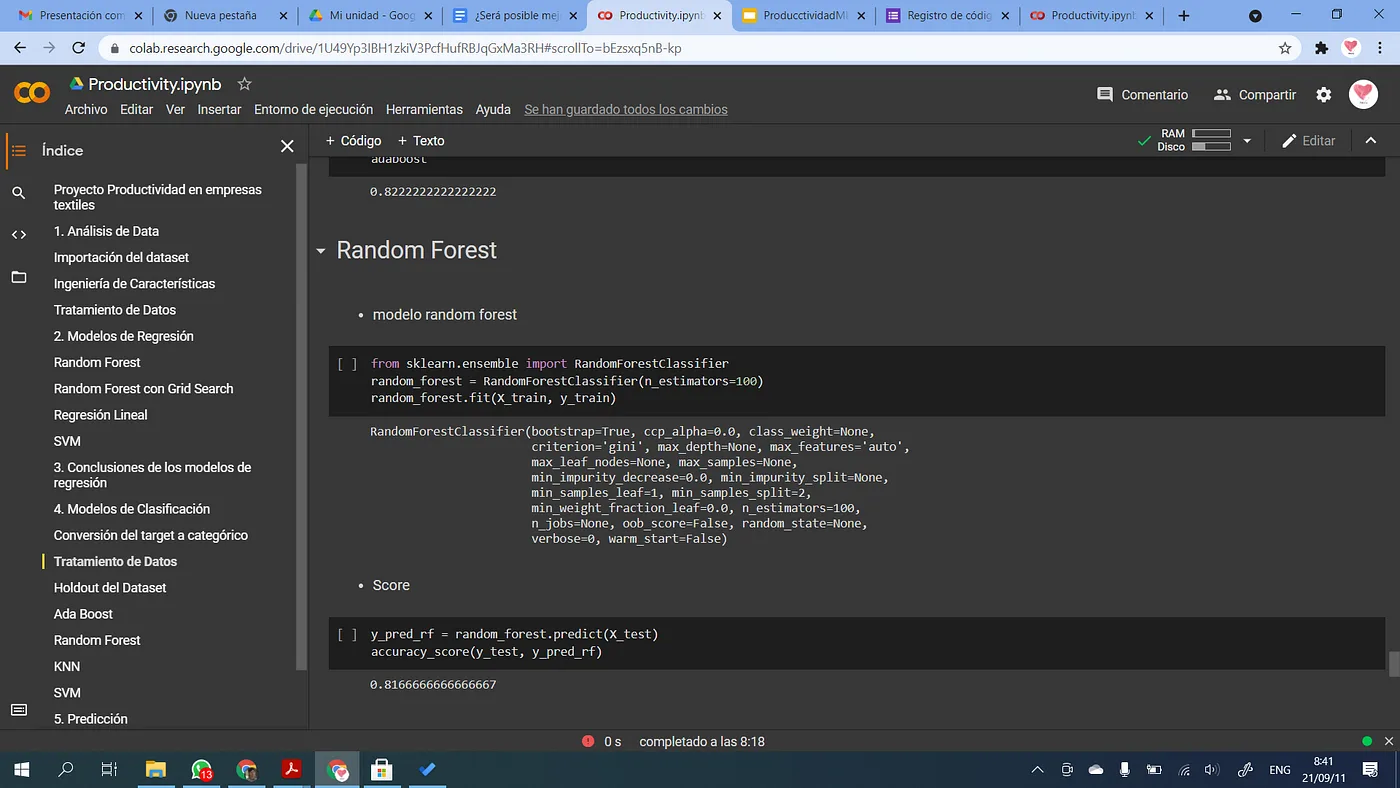
In the end we stayed with Adaboost and did an excellent job.
CONCLUSIONS
- With the regression models according to the performance (scores of 0.5) calculated, they do not fit the proposed dataset, a treatment was carried out on the target to become a classification problem.
- The classification models applied to the dataset gave favorable results, especially Adaboost with a score of 0.82.
- The process helped us learn how to reformulate a regression problem as classification. Metrics from the two tasks are not directly comparable.
Saturdays.AI
Written by
Jhonpoolcastro Jcs

More artificial intelligence!
Saturdays.AI makes AI more accessible through shared learning and projects with a social purpose. Our motto is AI4ALL IS AI4GOOD.
A story from the Saturdays.AI community. Originally published on Jan 2, 2022.
← More community stories