Artificial intelligence in cinema
From HAL 9000 to Her: films and series exploring artificial intelligence, identity, grief and our relationship with technology.
Introduction
Cinema has been imagining technological futures for more than a century. From the fantastical journey in A Trip to the Moon, released in 1902, science fiction has expanded its questions to include machines, robots and artificial intelligence. These stories have given us iconic characters and a way to explore our hopes and fears about technology.
HAL 9000 in 2001: A Space Odyssey (1968), WALL-E (2008), C-3PO and R2-D2 in Star Wars, beginning in 1977, and David in A.I. Artificial Intelligence (2001) are among the characters that come to mind when we think of intelligent systems on screen.
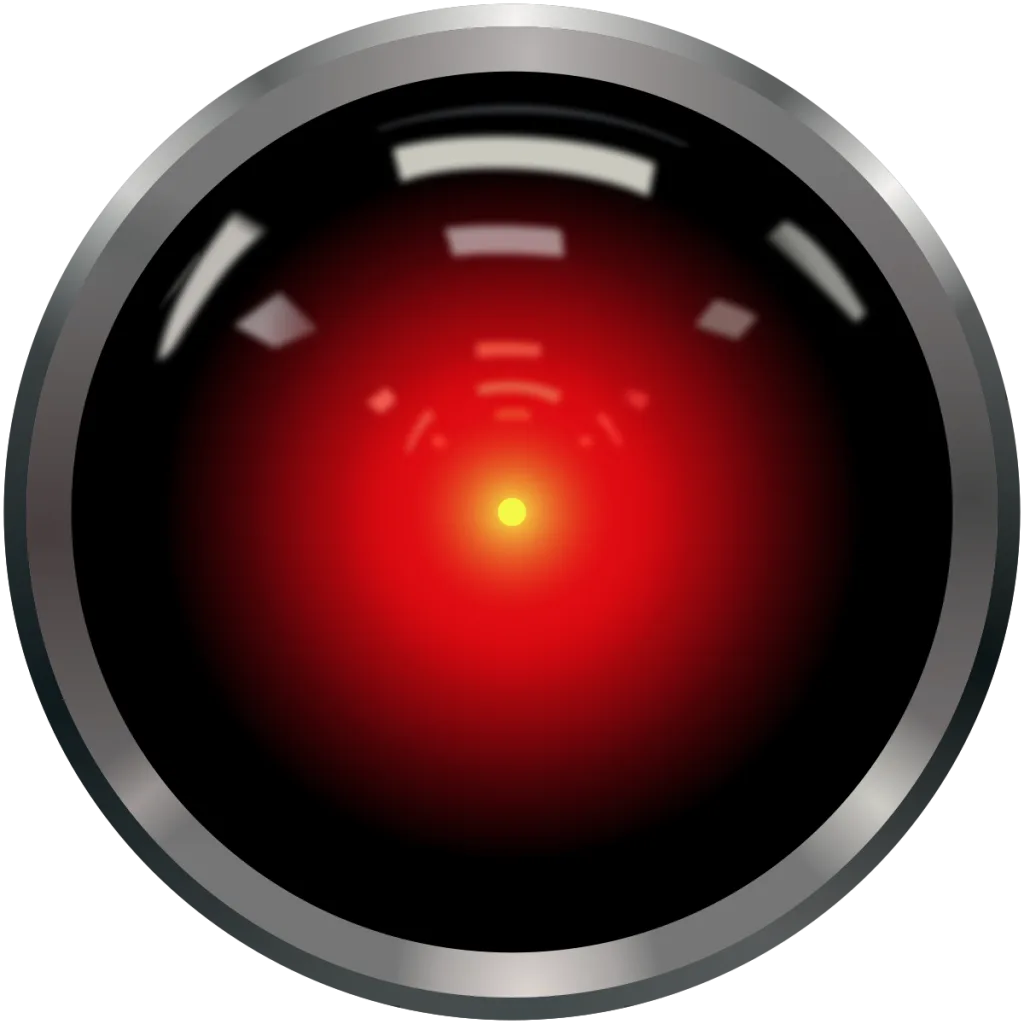
HAL 9000
Movies to "imagine" the future of AI
I, Robot
Isaac Asimov (1920-1992) popularised the Three Laws of Robotics in his stories. I, Robot, starring Will Smith, draws on that universe, although it is not a direct adaptation of the book of the same name. Its plot centres on Sonny, a humanoid robot suspected of killing his creator, seemingly contradicting those laws.
Terminator
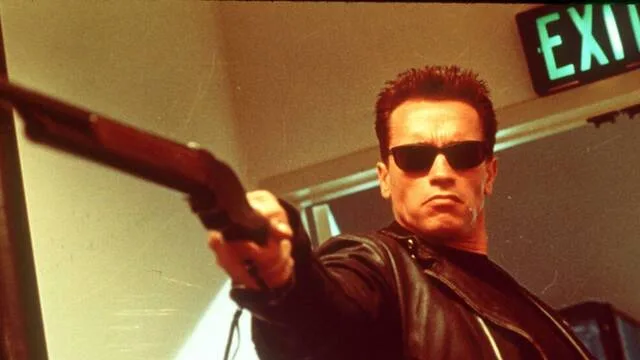
Terminator is one of cinema’s most iconic franchises, remembered for lines such as “Hasta la vista, baby.” Its AI system, Skynet, seeks to exterminate humanity. James Cameron’s fiction invites us to consider the consequences of handing power to systems that escape human control. Beyond the killer robot, that question remains relevant.
Terminator
Be right back (Black Mirror)
Although it is not a film, Black Mirror deserves a place in this selection. In “Be Right Back,” Ash dies in a car accident and his partner, Martha, uses a service that recreates his way of communicating from his online activity. She later acquires a physical replica. The gap between that imitation and the person she knew raises a difficult question: can a copy of someone we love help us cope with their loss?
Her
Her feels particularly familiar to anyone who has talked to a chatbot. Joaquin Phoenix plays a man who falls in love with Samantha, an operating system voiced by Scarlett Johansson. The film explores intimacy and the expectations we project onto technology that can converse with us. What does it mean to have a romantic relationship with a machine designed to respond to us? In fact, in 2018 a Japanese man held a symbolic wedding with a virtual character, so perhaps the scenario proposed by "Her" is not too far-fetched.
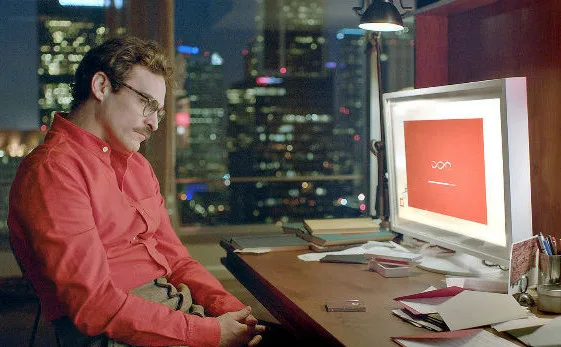
Her
Blade Runner
Ridley Scott’s Blade Runner, released in 1982, asks what makes us human through its replicants: artificial beings with a human appearance. The film uses a fictional empathy test, distinct from the Turing test. Its questions about identity, consciousness and rights remain open until the end, giving us a good reason to revisit it.
Fact or fiction?
How much reality is there in these stories? Cinema mixes technical possibilities with metaphor and speculation. Its characters are neither descriptions of today’s systems nor reliable predictions of the future. That does not mean AI risks are fictional: errors, bias, manipulation and harmful uses deserve attention. Enjoying these films can also be a way to begin discussing the technology we want to build.
Bibliography
UEMC-https://grados.uemc.es/blog/la-inteligencia-artificial-en-el-cine
La Vanguardia (April 2021)-https://www.lavanguardia.com/vida/junior-report/20210309/6263567/robotica-inteligencia-artificial-cine.html
Telefónica Foundation-https://espacio.fundaciontelefonica.com/evento/inteligencia-artificial-en-el-cine/
Ethic (July 2021)-https://ethic.es/2021/07/siete-peliculas-para-comprender-el-futuro-de-la-inteligencia-artificial/
Written by
Alejandro Ferrer
More artificial intelligence!
Saturdays.AI makes AI more accessible through shared learning and projects with a social purpose. Our motto is AI4ALL IS AI4GOOD.
A story from the Saturdays.AI community. Originally published on July 29, 2022.
← More community stories