PyCamp España 2026: four days of Python, nature and community
Four days of Python, nature and community. A look at PyCamp Spain 2026 and a way to learn, build projects and share knowledge outside of the usual spaces.
This archive includes automatic translations. Audio, video and text inside images remain in their original language.
The PyCamp Spain (https://pycamp.es) is an event in an inspiring environment to enjoy a few days full of Python programming and outdoor fun, connecting with good people. It has been held annually since 2022 and there are attendees who have participated in more than one edition.
For their part, people who have been present for the first time this year 2026 have been able to verify that PyCamp is much more than a meeting about the Python programming language. From the beginning on the morning of April 30, 2026 until the closing on May 3, 2026 at noon, around twenty attendees gathered in a rural environment to program, live together, debate, present projects and build a community around Python and any other issue. tech that arose.
The place chosen for the second consecutive year has been the Encinar de Escardiel school farm, a farm located in a natural area of great landscape and ethnographic value, a few kilometers from the Sevillian town of Castilblanco de los Arroyos and less than an hour's drive from the capital of Seville. The environment, far from the usual rhythm of the city, offered the ideal setting to concentrate, share ideas and enjoy a quiet coexistence between people with common technical interests.
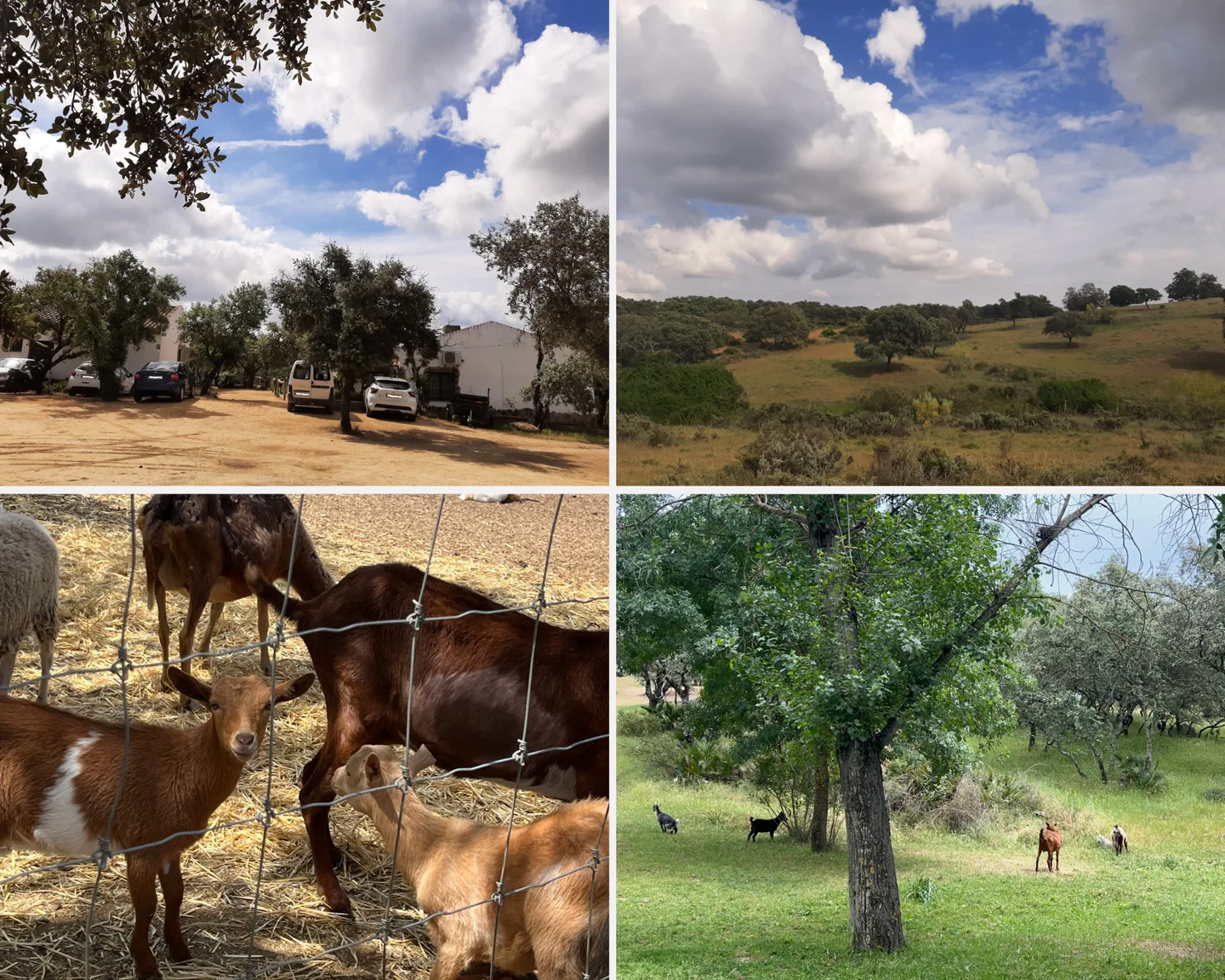
The Encinar de Escardiel school farm was an exceptional setting for PyCamp 2026. Source: https://photos.app.goo.gl/k8NAepAScdPj4q2h9/
The origin of the participants reflected the open and diverse nature that defines PyCamp. People from different parts of Spain and the world attended the 2026 edition. Added to this geographical diversity was a variety of technical and professional profiles. All of this enriched the conversations, expanded perspectives and reinforced the feeling of being present at an event that, although it may seem small due to its size, is large due to the community it builds.
A camp to program and share
PyCamp is, in essence, a programming camp. Attendees come with their laptops, their ideas, their doubts, their personal or professional projects, their desire to learn from other people, and, why not, with consoles, role-playing games, decks of cards, etc. Although Python is the common thread of the event, the camp does not have fixed technical criteria: there is also room for other programming languages, operating systems and alternative computing architectures, as well as other ways of understanding software development.
During the event, there were talks and presentations, some official and others that were presented throughout the stay, brought or improvised by the attendees themselves, about game programming, artificial intelligence, web development, microcontrollers, data science, MIDI control, emulators, etc. This mix between prepared sessions and interventions that arise naturally is part of the character of PyCamp: a flexible format, where knowledge circulates horizontally and where anyone can share what they are working on, a tool they have discovered, an idea they want to contrast or a technical experience that may be useful to others.
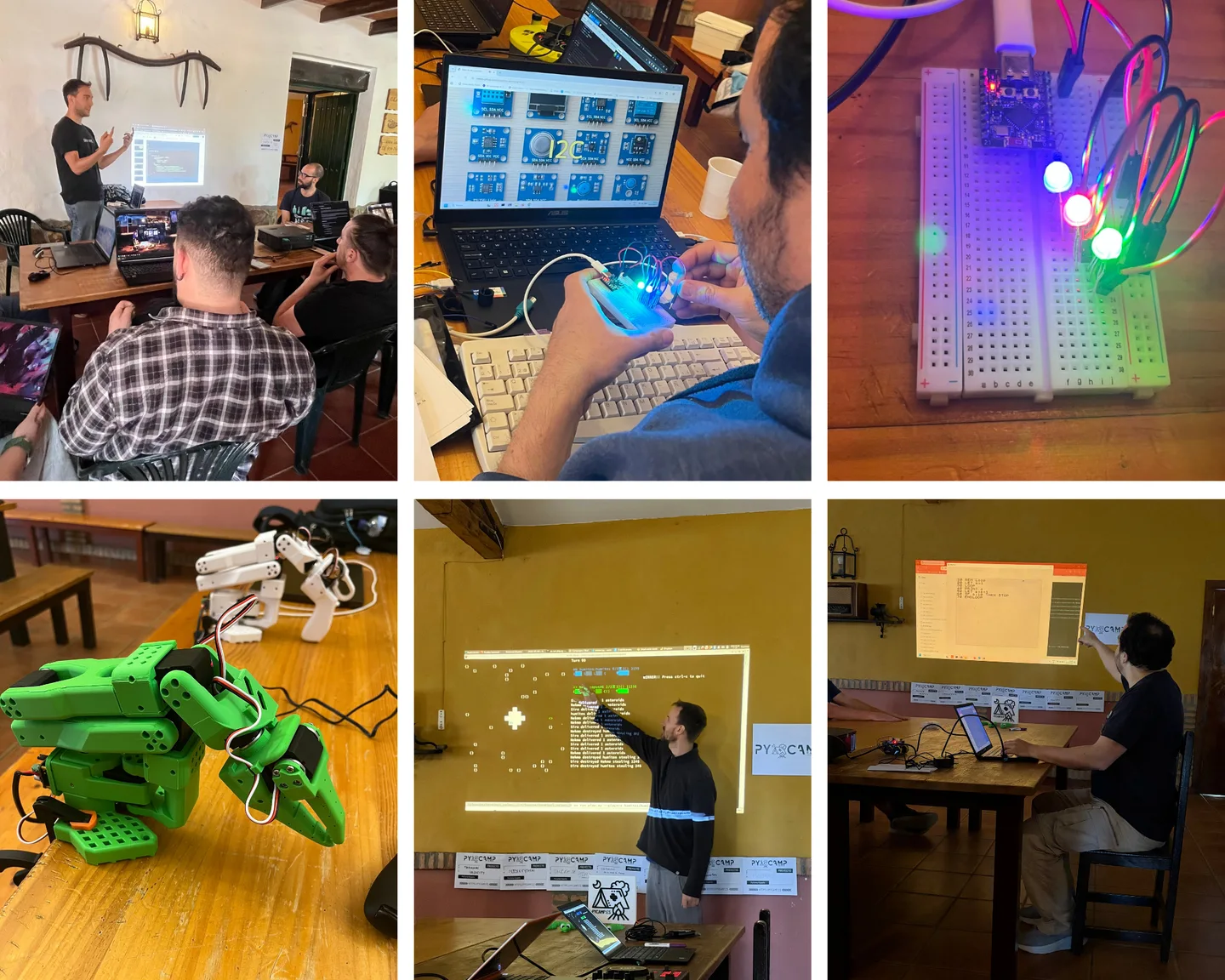
Some of the talks and workshops at PyCamp 2026. Source: https://photos.app.goo.gl/k8NAepAScdPj4q2h9/
Debating is also part of programming
During the PyCamp there was room for debate. They were not superficial conversations or a succession of commonplaces. There were different positions, disagreements and real discussion on current issues in the world. tech.
The debate showed differences that were expressed clearly, but always with respect. That combination—technical discussion, critical thinking, and care for the common environment—sums up very well the spirit of the event: a space where you can disagree without crossing red lines, and where talking about technology also implies talking about future scenarios—positive or negative—, ethical limits, and the role that the developer is going to play. software in the upcoming context.
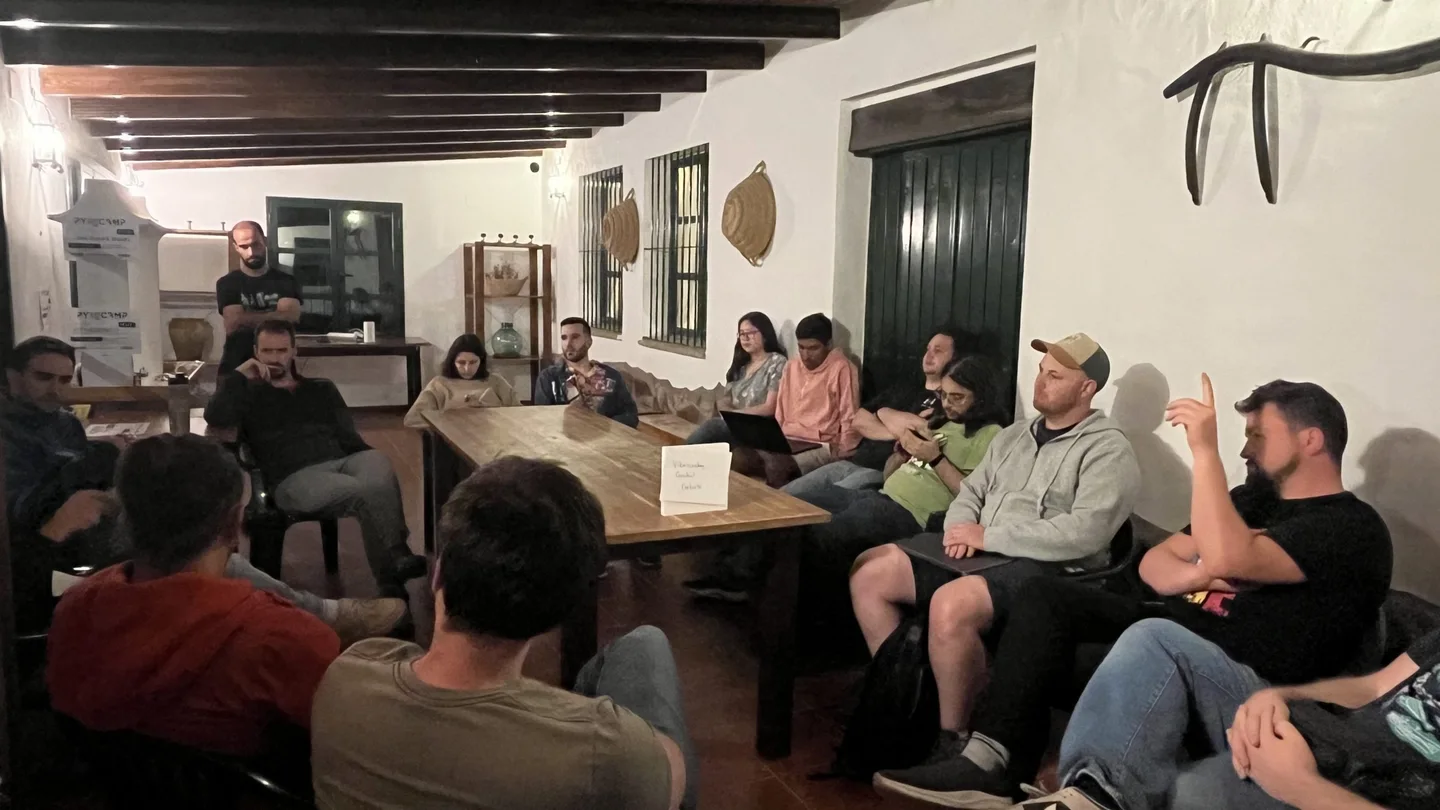
Debate at PyCamp 2026. Source: https://photos.app.goo.gl/k8NAepAScdPj4q2h9/
Coexistence in the middle of nature
One of the most characteristic features of PyCamp along with Python programming is coexistence. Instead of just attending talks for a series of hours as would happen at a traditional convention, participants live together for four days. This allows conversations to continue during meals, coffee or mate breaks, walks through the privileged natural environment or moments of joint work. The result is a closer, more horizontal format that encourages networking real.
On the other hand, you normally spend the night indoors, although the possibility of sleeping in a tent is also contemplated, an option that connects directly with the original essence of PyCamp. This combination of technical work, community life, camping experience and contact with nature helps create an environment different from that of a typical conference.
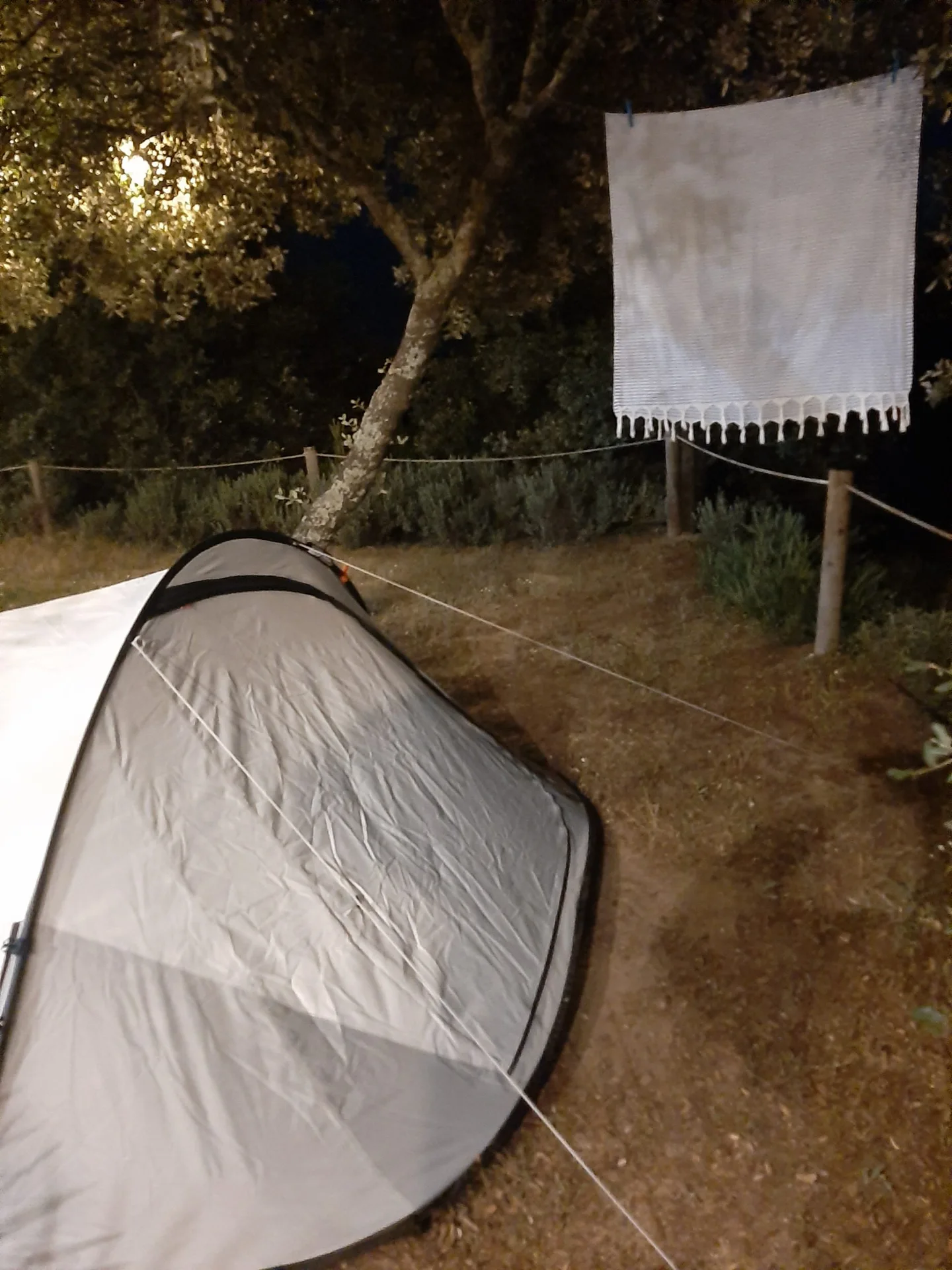
Tent at PyCamp 2026. Source: https://photos.app.goo.gl/k8NAepAScdPj4q2h9/
And not everything was programming, debate or presentations. There was also space to disconnect, as demonstrated by the Mario Kart contest and the role-playing games that took place during the camp and which contributed to giving a more playful and shared dimension to the meeting. Needless to say, the privileged environment of the Encinar de Escardiel invited you to take a walk to contemplate the pasture landscape and breathe fresh air. In other words, at PyCamp you not only come to program but to have fun.
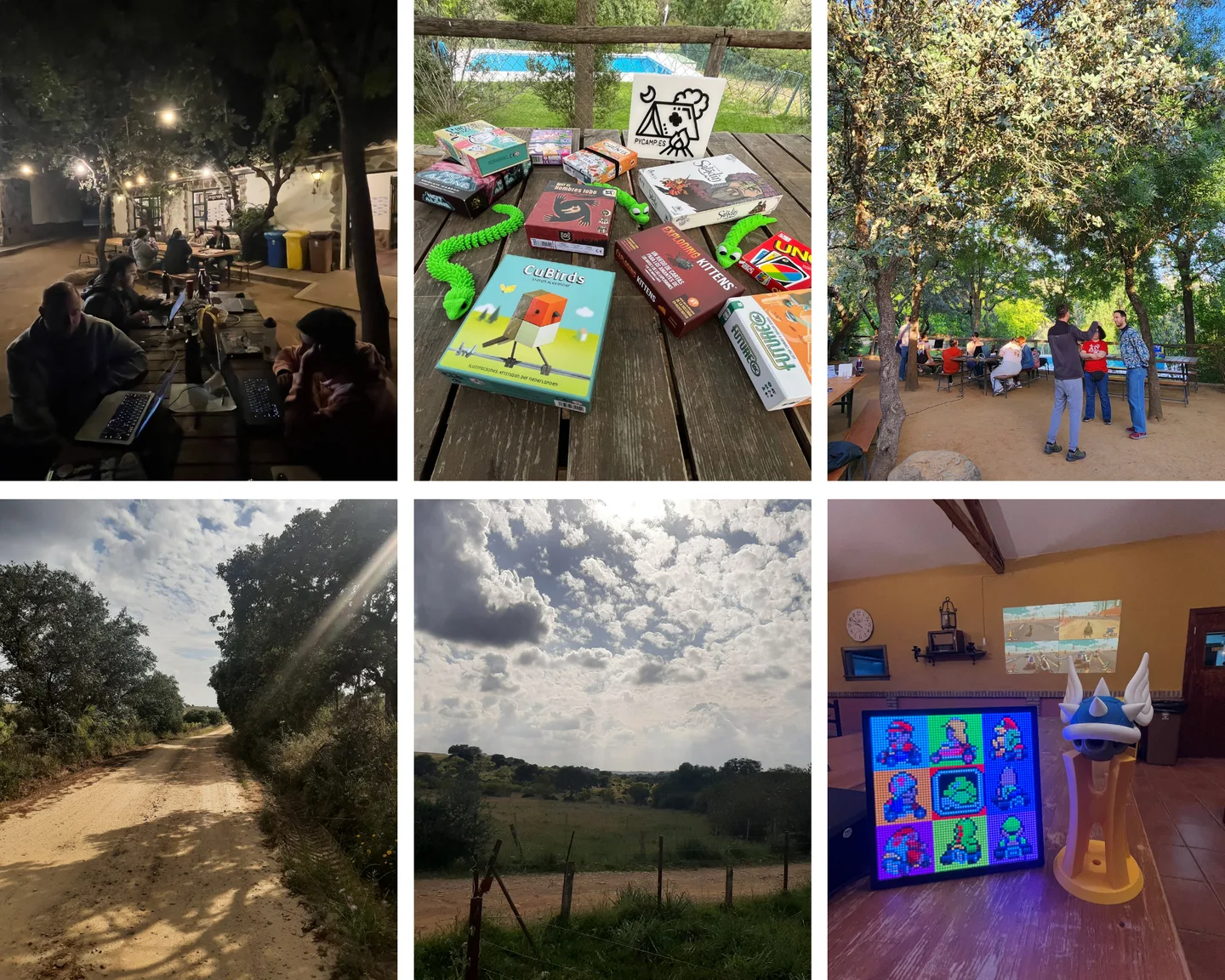
At PyCamp there are moments of relaxation and recreation. Source: https://photos.app.goo.gl/k8NAepAScdPj4q2h9/
A pleasant and safe event
PyCamp Spain has decided to use the Python Argentina code of conduct, by which total respect for gender, sexual orientation, disability, physical appearance, body size, ethnicity, religion, socioeconomic status, etc. It is a fundamental part of the event. There is zero tolerance for harassing behavior. The organization may take whatever measures it deems appropriate to ensure that the camp is a safe space for all participants. Along the same lines, the event had a purple dot.
In addition, PyCamp Spain 2026 had specific well-being measures such as a hygiene kit and, apart from the scheduled meals, snacks for him coffee break. Likewise, the organization paid attention to food: three meals a day were offered, balanced and with daily presence of fruit and vegetables, as well as menus adapted for attendees with special needs.
One of the most pleasant things about living together was that the food was homemade. Faced with the more impersonal feeling that sometimes accompanies technical meetings, the PyCamp 2026 meals reinforced the close nature of the camp and became another space to talk, rest and continue building community.
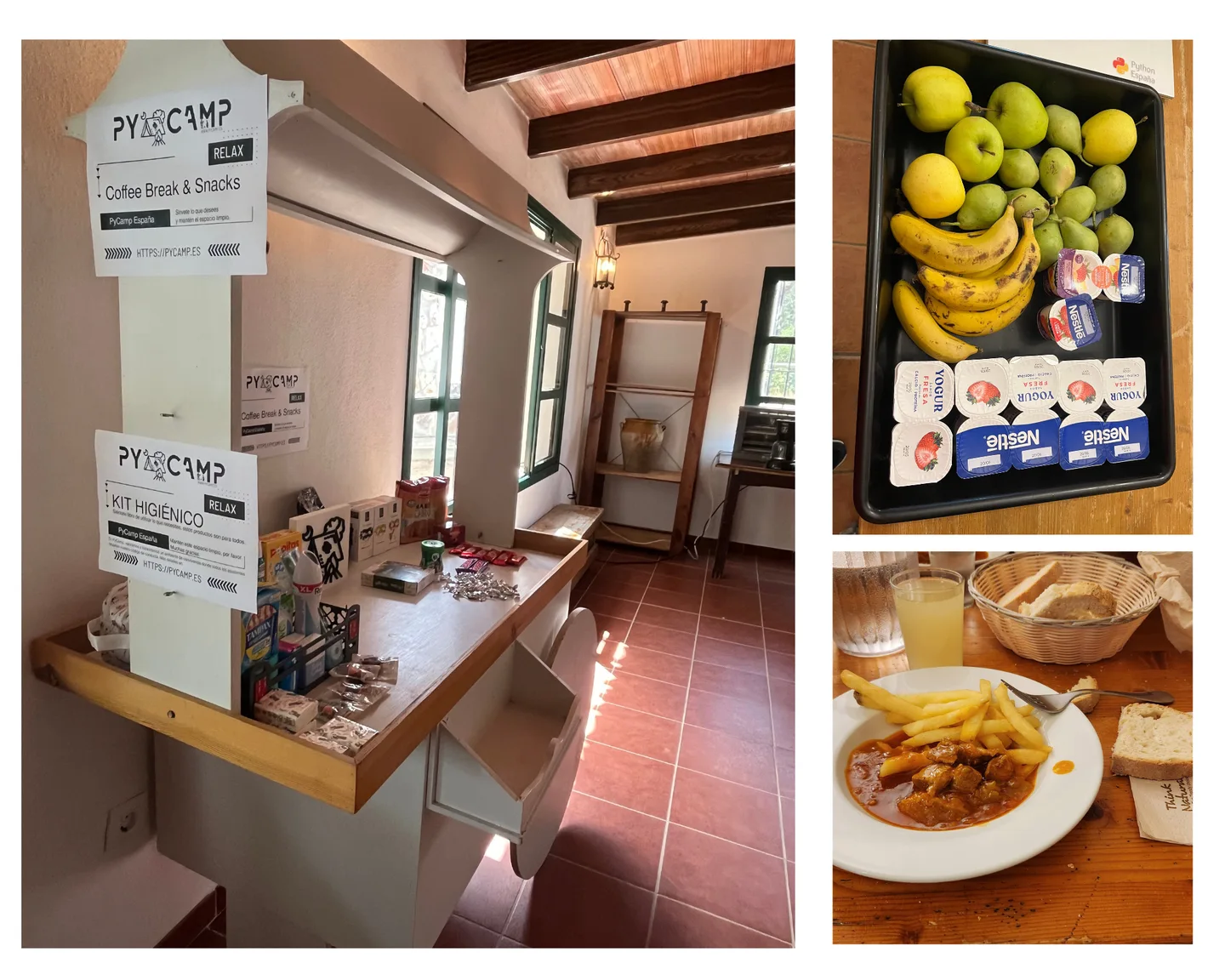
Hygienic kit, snacks and food at PyCamp 2026. Source: https://photos.app.goo.gl/k8NAepAScdPj4q2h9/
The possibility of doing internal volunteering at the PyCamp itself was also especially interesting: attendees could lend a hand in organizing the daily meals or go get groceries with their vehicle to the nearest town. These gestures say a lot about the spirit of the event, since it is not just about attending, but also actively participating in the care of the common space and forcing human interaction.
The work of the organization
The organizing team deserves special recognition since, from arrival to closing, they were attentive to all the details in such a way that the meeting took place without incident and in accordance with the code of conduct.
This work, not always visible, is what ensures that a coexistence event like PyCamp can be enjoyed from start to finish.
A logistics that also takes care
Another of the added values of PyCamp Spain 2026 was the bus (“PyBus”) organized to transport attendees from the Sevilla-Santa Justa station to the Encinar de Escardiel school farm and vice versa.
This logistics was crucial to connect a point as central to Seville as the Santa Justa station with the venue, since it made arrival and departure possible for those who did not have their own vehicle, and allowed the experience to begin and end collectively.
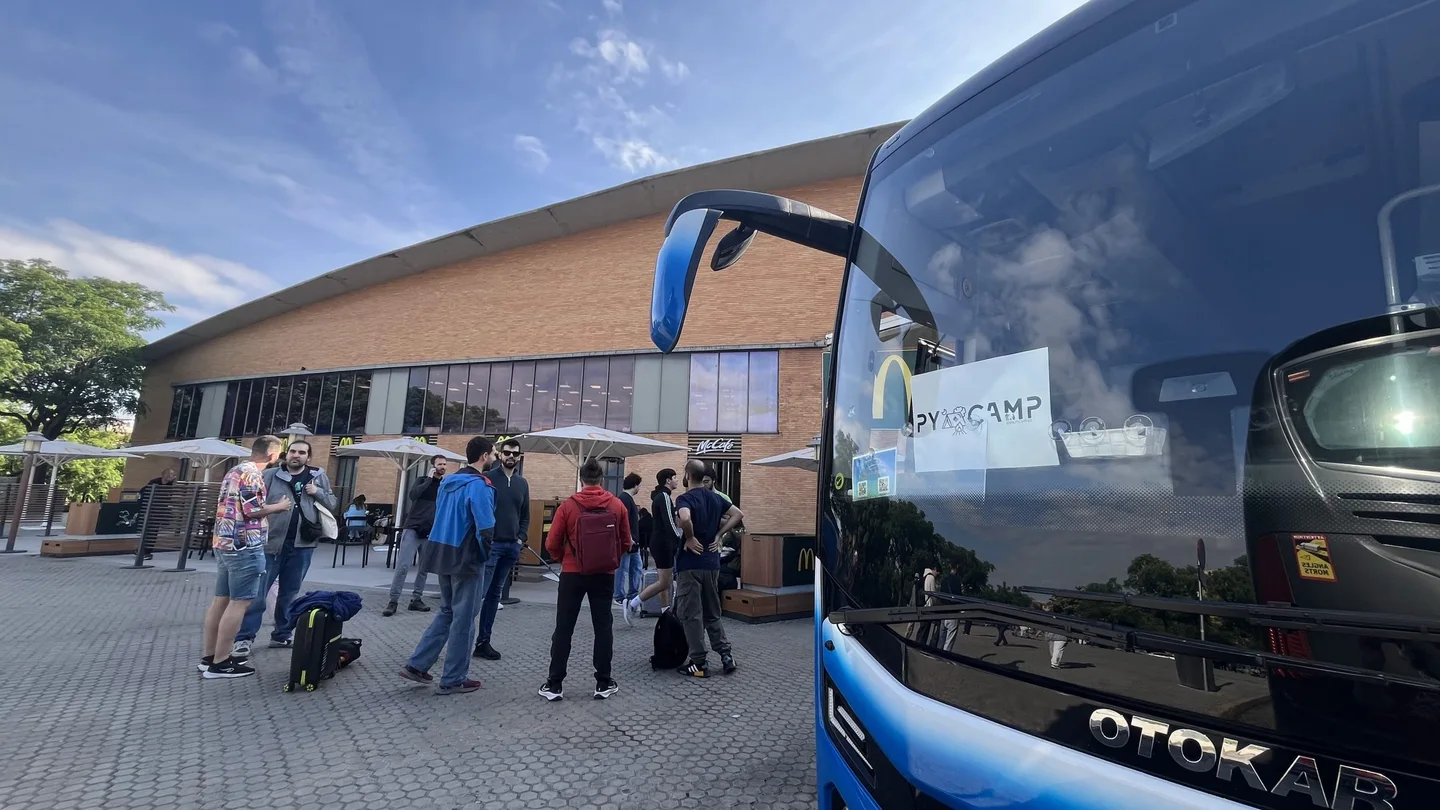
The “PyBus” shortly before leaving from the Sevilla-Santa Justa Station to the PyCamp. Source: https://photos.app.goo.gl/k8NAepAScdPj4q2h9/
A community that is built collaboratively
In conclusion, PyCamp Spain 2026 demonstrated that the Python community is not built solely on repositories, conferences or messaging channels. It is also built by sharing a table, solving problems in a group, listening to other people's projects, showing what one does, contributing what one knows and learning from what other people bring with them.
In the middle of nature, with computers, technical conversations and coexistence, the meeting offered a space to program without rushing, connect with other people and remember that software development can also be a human, community and collaborative experience.
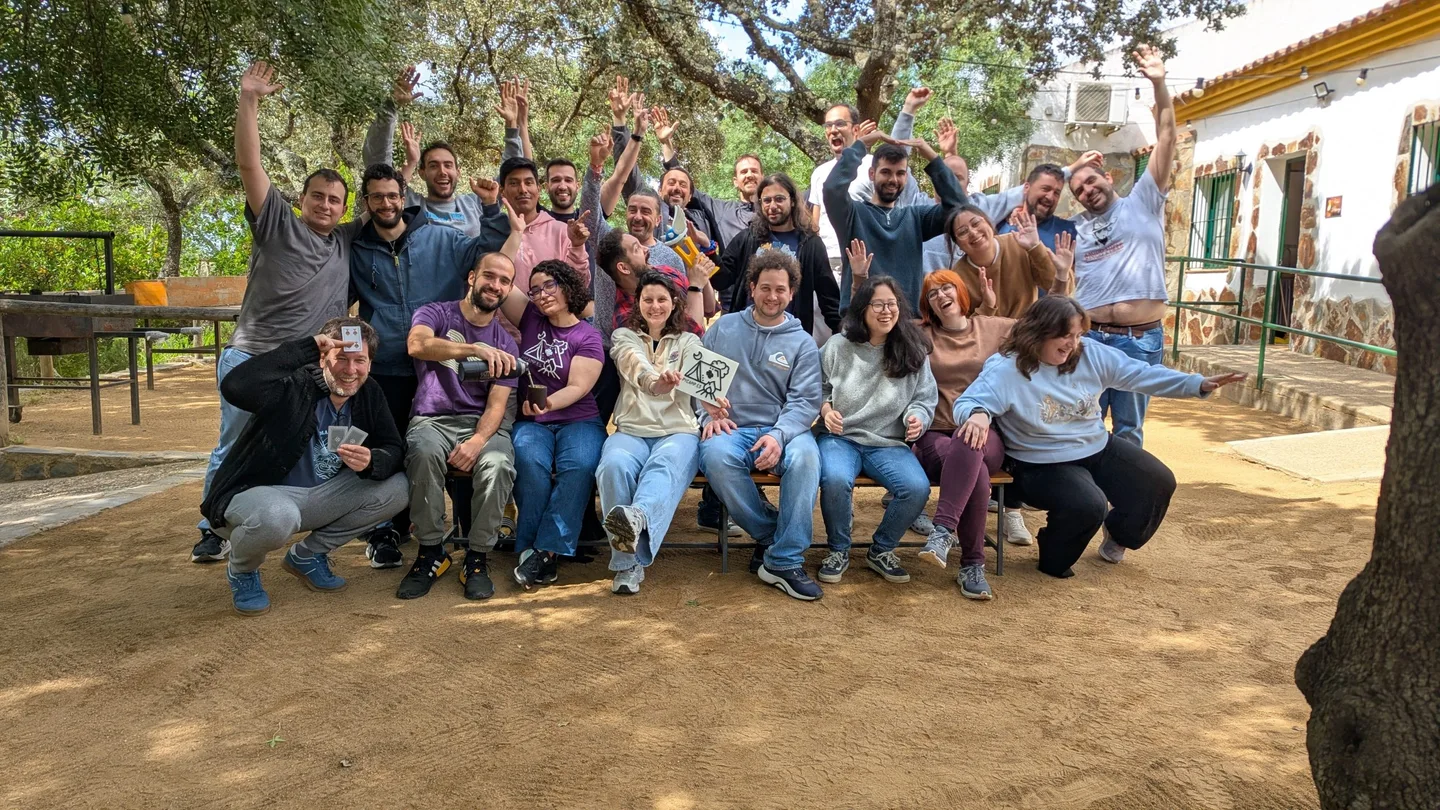
Family photo from PyCamp 2026. Source: https://photos.app.goo.gl/k8NAepAScdPj4q2h9/
To know more
To learn more about PyCamp, discover previous editions and subscribe to the newsletter To receive news about the next edition see https://pycamp.es
A history of the Saturdays.AI community. Originally published on June 9, 2026.
← More community stories