From Chaos to Control: The Transformation of Carlos and his Smart Factory
The original story describes a food factory’s transformation through data and computer vision. Its figures describe the case presented, not independently verified results.
Editorial note: the original story does not provide independent evidence for the reported results. Its figures describe the case presented and should not be treated as verified outcomes. Carlos Méndez had spent more than twenty years running FríoMon, a family-owned frozen-food company located in the industrial belt of Barcelona. He had inherited the business from his father, a man who believed that hard work, perseverance and intuition were enough to keep a factory running. For a long time, that was enough. But times had changed.
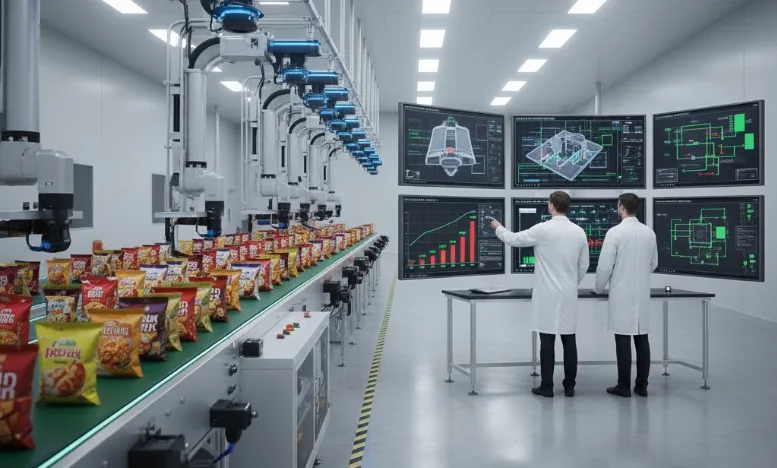
The production lines continued to operate with the same machinery as more than a decade ago. Every day hundreds of boxes of frozen cannelloni, meatballs and croquettes left for supermarkets throughout Spain. However, errors were increasingly costly: mislabeled batches, products that were stored out of order, and a manual quality control system that depended on the tired eyes of operators after long days watching product pass along a belt.
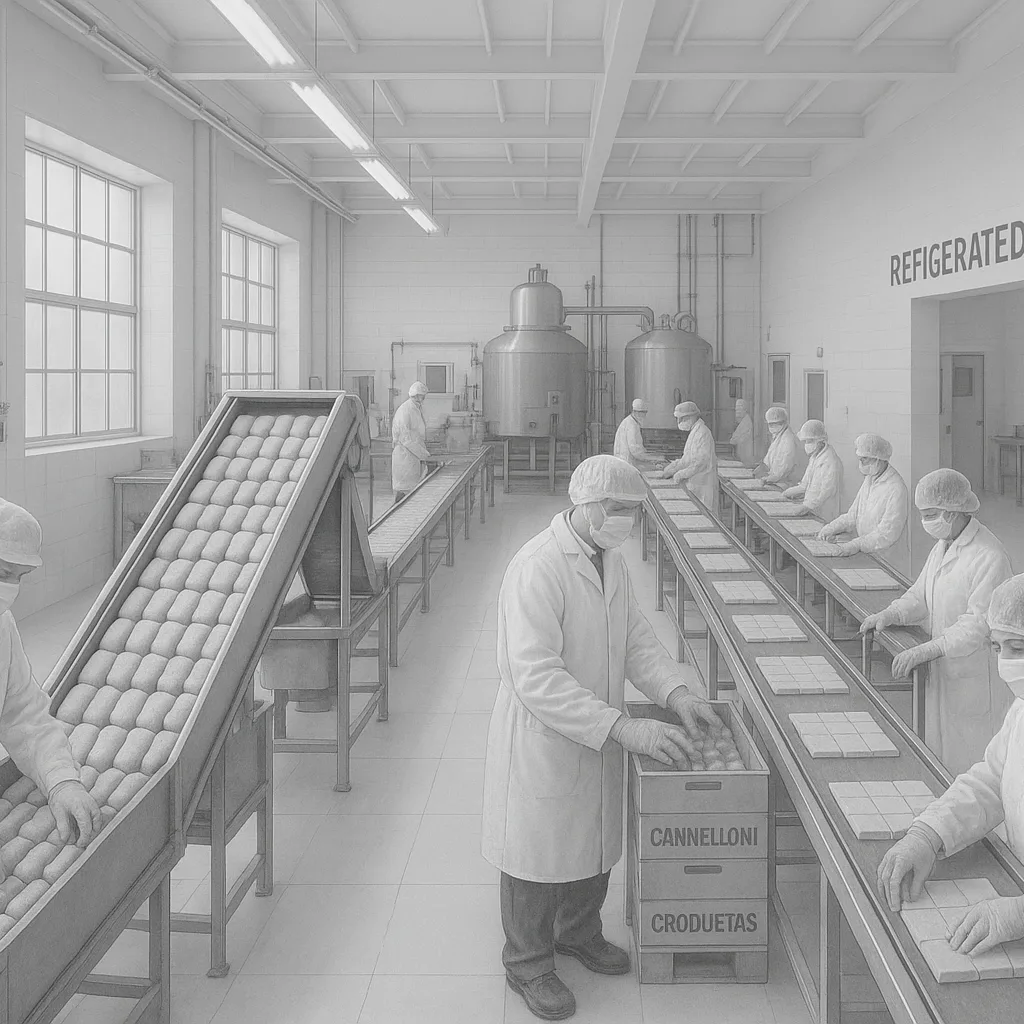
Carlos, at 47 years old, felt that the business was slipping out of his hands. It wasn't a lack of effort, but rather a lack of vision. “I can't keep putting out fires every day,” he repeated to himself in front of the screen in his office, looking at graphs that he didn't fully understand.
The turning point
One day, during a technology fair in Barcelona, Carlos stopped in front of a small stand where a group of young people showed a camera connected to a computer. On the screen, attendees saw how the system detected defects in fruits and vegetables in real time.
—This is artificial vision one of the engineers explained. It analyses images in milliseconds and detects flaws that the human eye could miss.
Carlos watched, fascinated. That same afternoon, he looked for information on how to apply something like this to his plant. He discovered that it was not just a camera: it was artificial intelligence, machine learning, algorithms capable of see, predict and make decisions. He didn't sleep that night.
For the first time in a long time, he felt that the solution to his problems might be right in front of him.
The beginning of the change
He decided to take the leap. He lacked technical knowledge but was determined to learn. He hired a young data engineer, Lucía, who had taken part in a project with Saturdays.AI. “I don’t need someone to sell me promises,” Carlos told her. “I need someone who understands my factory and helps me change it.”
Lucía accepted the challenge. During the first few weeks, she toured the plant with a tablet, recording the conveyor belts, freezing tunnels and packaging areas.
“Your problem isn’t a lack of effort,” she told him one day. “ It is the lack of data. Everything that happens here is left up in the air: who did what, when each batch was frozen, how many seconds it was at a certain temperature... the AI can't help you if you don't feed it with real information.”
Carlos began to see his factory from a new perspective.
Machine vision and quality control
The first module was a high-resolution camera connected to a computer vision system. It photographed products on the conveyor and analysed the images. If it detected an irregularly shaped croquette, damaged packaging or a QR code that did not match the batch, it sent an alert and diverted the item for inspection.
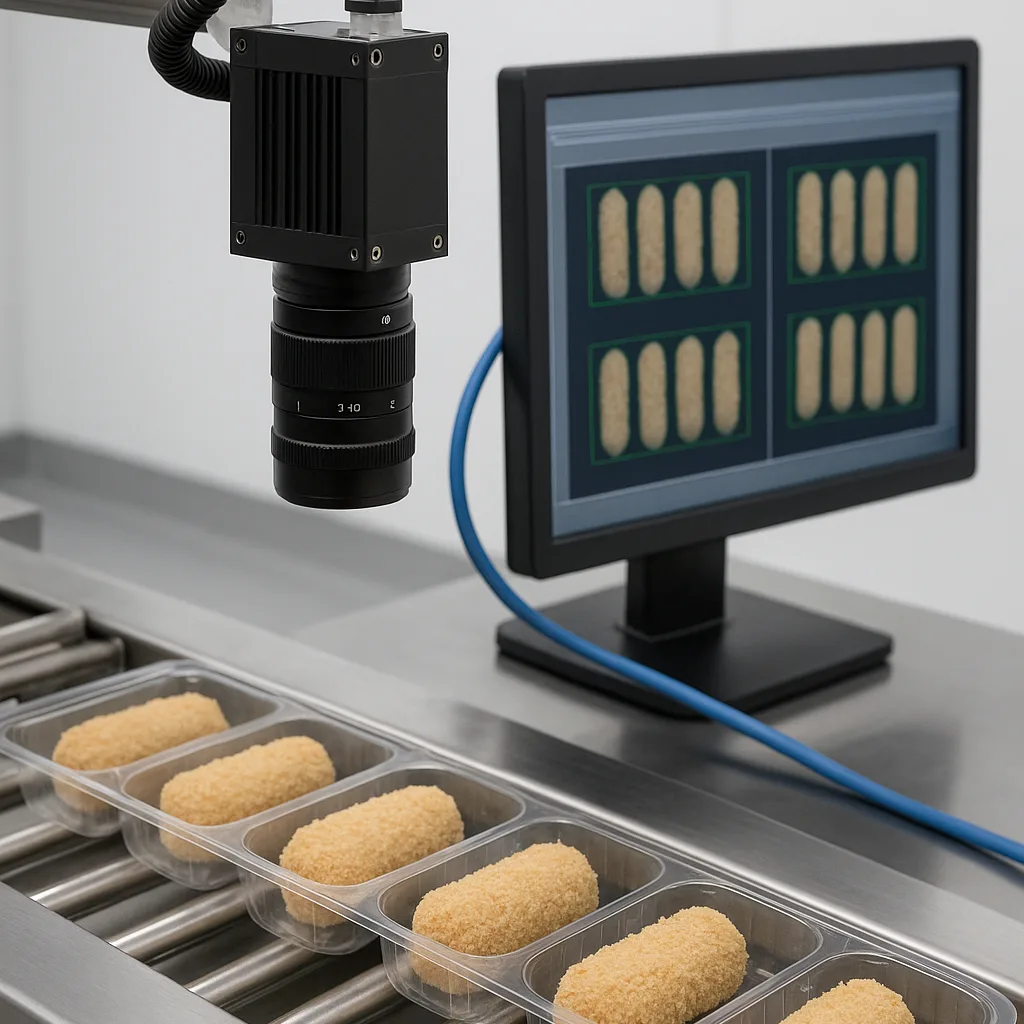
Within weeks, reports showed a 60% reduction in labeling errors. The operators, who at first looked at the camera with distrust, began to see it as an ally. “Now we know what fails and when,” they said.
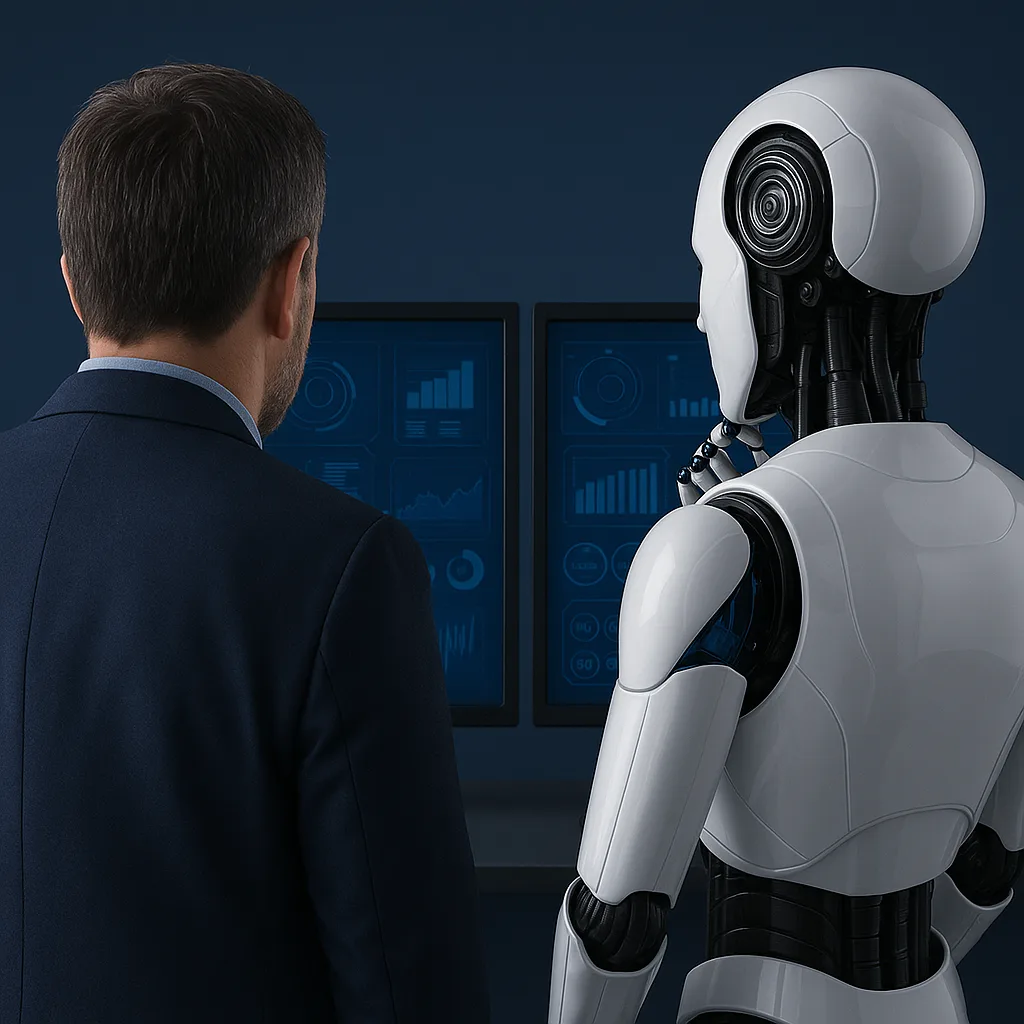
Carlos got excited every time he saw the control panel on the monitor in the supervision room. Instead of loose sheets and handwritten notes, I had a dashboard displaying real-time statistics. For the first time, his factory spoke.
From the warehouse to the predictive brain
The next step was to automate the warehouse. Lucía proposed integrating vision sensors and optical character recognition (OCR) to read pallet labels that arrived and left.
Every time a truck unloaded raw materials, the camera recognized the batch, the expiration date and the supplier, comparing it with the digital delivery note. If there was any discrepancy, the system warned before the product entered the chamber.
Errors fell, and the team introduced FEFO (First Expired, First Out): using or dispatching products with the earliest expiry dates first. The system flagged batches approaching expiry so staff could review and prioritise their use or sale.
“Now the warehouse thinks before us,” one of the managers said with a smile.
But the most revolutionary was yet to come. Lucía and her team created a predictive AI model that analyzed consumption patterns, delivery times and environmental conditions to adjust production and storage.
The system could suggest, for example, that the production of certain products be reduced in summer or that the packaging of others be brought forward before a long holiday.
It was as if the factory had acquired a sixth sense.
Resistance and adaptation
Not everything was easy. Some workers feared that machines would replace them. Carlos gathered everyone in the meeting room.
“No one is going to lose their job because of this,” he told them. “But we are going to change how we work. I want AI to help us do it better.”
From that day on, they organized training sessions. Operators learned to interpret AI indicators, understand heat maps that showed failure points on the line, and propose improvements.
Even some veterans, who had never touched a computer, began using tablets to record incidents.
The human and business impact
In less than a year, FríoMon had become a reference for industrial innovation. The story reports a 30% reduction in waste, a 40% drop in complaints and an 18% increase in profits. It does not provide independent evidence for these figures.
But beyond the numbers, what changed was the culture.
Carlos was no longer the businessman who reviewed papers at the end of the day. He had become a digital leader. He understood that artificial intelligence was not magic or a threat: it was a tool of knowledge.
"Before we made decisions with our eyes closed," he confessed in an interview for a sector magazine. "Now we have them wide open, and those of AI too."
Lucía was promoted to director of innovation. Together they began planning a second phase of the project: integrating IoT sensors into refrigerated trucks to monitor temperature and routes in real time. AI could detect cooling delays or failures and alert before the product spoils.
Epilogue: the legacy of a vision
A year later, Carlos returned to the technology fair where it all began. He passed by the same stand, now larger, full of screens and drones.
"Thanks to this," he told the exhibitor, smiling, "today I have a factory that sees, thinks and learns."
As he walked away, he thought of his father, of the notebooks and wristwatches. He smiled. "We have not lost the essence," he told himself. "We have only given it a new mind." Since then, FríoMon was no longer only making frozen food: the team had learned to turn data into decisions. Carlos, who had once feared losing control, found a different way to lead the company.
The chaos was behind him.
There were still problems to solve, but the team now had more information and better tools to address them.
Carlos’s story invites us to imagine an industry that learns and adapts with AI. If you work in a company and want to explore that change through practical projects, join Saturdays.AI. Saturdays.AI.
The smart future starts with you.
A story from the Saturdays.AI community. Originally published on Oct 13, 2025.
← More community stories